

Experience Travel Inspiration
Vienna Without Barriers: Your Vetted Guide to Cobblestones & Culture
What if Vienna’s Instagram-worthy cobblestones aren’t the barrier you’ve been warned about?
This insider guide reveals what standard travel resources miss: smooth pathways running parallel to historic streets, hidden elevator entrances at the Opera House, and covered museum passages that bypass rough courtyards entirely. You’ll discover which U-Bahn stations offer seamless transfers and accessible coffeehouses where you can linger without compromise.
by Long Lin-Maurer • January 11, 2026
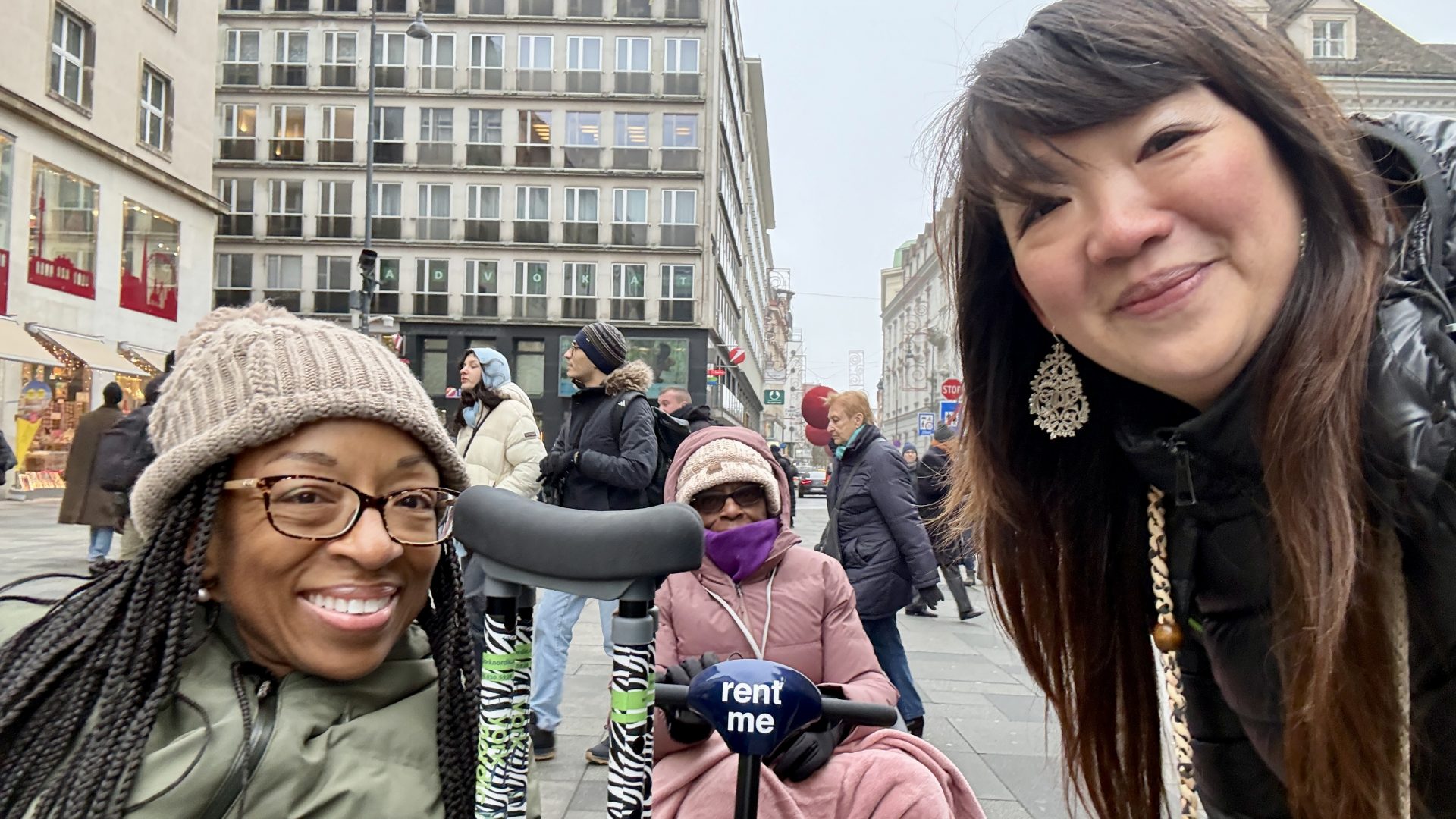
Cobblestones and Culture: My Secret Vetted Routes for a Barrier-Free Vienna
Vienna consistently ranks among the world’s most livable cities, celebrated for its imperial grandeur, world-class museums, and coffeehouse culture. Yet for travelers with mobility challenges, the city’s ancient streets can present unexpected obstacles. Those charming stones that photograph so beautifully often become formidable barriers for wheelchair users, travelers using walkers, or anyone with balance concerns. The good news is that the Austrian capital offers remarkable accessibility when you know exactly where to go. This guide details Cobblestones and Culture: My Secret Vetted Routes for a Barrier-Free Vienna, helping you navigate the city’s dual personality of historic charm and modern infrastructure.
The Cobblestone Reality: Essential Vienna Mobility Tips
Vienna’s streets tell the story of a city built across centuries, featuring Habsburg Empire architecture that defines the skyline. The medieval inner districts feature original paving—some laid centuries ago—that create the romantic atmosphere travelers imagine. However, these surfaces present genuine challenges for mobility devices, creating vibration, instability, and exhaustion for anyone traversing them.
Come and experience travel!
Personally designed, seamlessly delivered – your journey, our expertise!
We are a boutique travel agency and consultancy specializing in Hub & Spoke Tours across Central Europe, the Benelux and the Dolomites.
While the city has invested in accessibility, many enhancements remain invisible to first-time visitors. The key to a handicap accessible Vienna experience lies in understanding the layout: modern smooth pathways often run parallel to historic routes. Knowing which side of a street to walk on or which courtyard passages to use transforms the experience.
Local knowledge serves as the ultimate accessible Vienna guide. A visitor might assume that the Graben—one of Vienna’s most famous pedestrian shopping streets—is entirely rough terrain. In reality, smooth paths in Vienna run down the center, wide enough for wheelchairs and scooters, while the aesthetics remain on the sides. These details rarely appear in standard guidebooks but are crucial for planning step-free Vienna itineraries.
The Ringstrasse: A Model for Wheelchair-Friendly Vienna Tours
The Ringstrasse, the magnificent boulevard encircling the Viennese historic center, represents one of Europe’s greatest urban successes. When the old city walls were demolished, the resulting boulevard was built with wide sidewalks and paved walkways designed for elegant promenading.
Today, this infrastructure supports barrier-free cultural experiences beautifully. The three-mile loop offers continuous smooth terrain with proper curb cuts. The Ringstrasse passes significant institutions—the Opera House, the Kunsthistorisches Museum, and Parliament—all accessible via routes that avoid problematic surfaces.
Come and experience travel!
We design bespoke travel experiences with a perfect balance of cultural depth, efficiency and comfort.
Specializing in seamless hub-and-spoke journeys, we create well-paced, immersive itineraries tailored to your interests.
The Opera House deserves special mention. While the front entrance features famous steps, a discrete side entrance with elevator access exists on the Kärntner Strasse side. This elevator descends to the ornate lobby, ensuring everyone experiences the same magnificence. The auditorium offers designated seating with sightlines engineered for wheelchair accessible routes in Vienna.
MuseumsQuartier Accessibility: Smooth Paths to Artistic Treasures
The MuseumsQuartier accessibility situation presents an interesting paradox. The exterior courtyard features artistic stone patterns that look stunning but challenge mobility devices. However, every museum within the complex maintains pristine accessible entrances through alternative pathways.
The Leopold Museum offers elevator access to all floors and smooth flooring throughout. The MUMOK (Museum of Modern Art) was designed with universal design standards as a core principle, featuring wide corridors and viewing areas. Across the Ringstrasse, the Kunsthistorisches Museum provides wheelchairs for visitors and staff trained in Vienna for reduced mobility protocols.
A secret for your accessible Vienna guide: the complex contains covered passages with smooth flooring connecting various buildings. These allow visitors to move between venues without returning to the rough courtyard, creating a comfortable museum-hopping experience regardless of the weather.
Come and experience travel!
Our expertise lies in uncovering authentic stories, hidden corners, and behind-the-scenes experiences that bring destinations to life.
We design customized mindful travel experiences that seamlessly integrate mindful eating and mindful indulgence. These experiences foster self-care and create transformational journeys that nurture mental well-being, promote sustainable travel, and strengthen family connections.
Schönbrunn Palace Tours: The Accessible Imperial Experience
Schönbrunn Palace might seem daunting, but Schönbrunn Palace tours are surprisingly accommodating. The palace has created a multi-tiered approach that fits the criteria for an accessible Austrian capital.
The Imperial Tour is fully accessible via elevator. The audioguide system includes descriptive options, and staff assist with positioning for optimal viewing. While the palace offers a map, knowing the Cobblestones and Culture: My Secret Vetted Routes for a Barrier-Free Vienna helps interpret these options in context.
The gardens present interesting choices. The main axis features compacted gravel that accommodates scooters with relative ease. The Rose Garden offers paved walkways with benches. The famous Gloriette is accessible via a side path, though the gradient requires consideration. Furthermore, the palace zoo has undergone renovations, connecting all animal houses with paths designed for Vienna for reduced mobility.
Finding Accessible Coffeehouses Without Compromise
Viennese coffeehouse culture is a UNESCO heritage, but for travelers needing step-free Vienna itineraries, finding the right spot requires vetting.
Accessible coffeehouses like Café Central manage this balance beautifully. Despite occupying a historic palace, it offers step-free access and space for navigation. The staff understands that the culture involves lingering, making it ideal for travelers who need time to settle. Café Landtmann provides excellent facilities, including accessible restrooms—a crucial factor in any accessible Vienna guide.
Lesser-known gems also offer barrier-free cultural experiences. Contemporary roasters have opened spaces designed with universal access principles, combining excellent coffee with wide aisles and modern facilities, sacrificing nothing of the soul while eliminating barriers.
The Danube and Beyond: Accessible Austrian Capital Excursions
Vienna’s position as a hub makes day trips essential. For those seeking wheelchair-friendly Vienna tours that extend beyond the city limits, the “hub-and-spoke” approach works best.
The Wachau Valley wine region is an excellent option when approached strategically. While river towns like Dürnstein have cobblestones, private tastings at family-run Heurigen can be arranged at ground-level venues. This offers an authentic experience without the barriers of village streets.
Salzburg offers exceptional accessibility given its Mozart-era architecture. The Mirabell Gardens provide smooth pathways, while a lift accesses the Hohensalzburg Fortress. Routing is key here: knowing which streets to avoid transforms Salzburg into a manageable destination for those requiring smooth paths in Vienna and its surroundings.
Practical Wisdom: Navigating Public Transport and Weather
Experience reveals patterns no guidebook captures. Morning visits mean fewer crowds, making mobility devices easier to maneuver. Rain transforms surfaces, making a knowledge of indoor alternatives essential.
Public transport Vienna U-Bahn (subway) features elevators at most stations, but knowing which stations have the smoothest transfers requires intimate system knowledge. The accessible tram routes—many featuring low-floor cars with ramps—connect cultural sites efficiently. Understanding the network is vital for anyone relying on wheelchair accessible routes in Vienna.
The Transformative Accessible Journey
Vienna’s story is hopeful. A city of Habsburg Empire architecture, built before the concept of universal design, has committed to welcoming all visitors. The solutions—smooth parallel routes, elevator access, and vetted establishments—exist for those who know where to look.
For travelers, Cobblestones and Culture: My Secret Vetted Routes for a Barrier-Free Vienna is more than just a philosophy; it is a practical roadmap. The opportunity emerges when planning succeeds: experiencing Vienna’s intellectual depth without specific exclusions. The city’s treasures await all who use these Vienna mobility tips to reach them.
Cobblestones and Culture: Resources for Navigating Historic Vienna Barrier-Free
- Accessible Vienna – Official Travel GuideThe Vienna Tourist Board’s comprehensive portal detailing accessible routes through the historic city center, including information on museums, sights, and public infrastructure designed to bypass uneven heritage paving.
- City of Vienna Official Map (Wien.at)The municipal geographic information system which offers specific overlays for accessibility, allowing users to plan routes that avoid steep gradients and locate public elevators near historic landmarks.
- BIZEPS – Independent Living AustriaA leading NGO resource providing critical, vetted advice and brochures for disabled visitors navigating Vienna, with a focus on civil rights and practical mobility in the urban environment.
- The Hofburg Imperial Palace – Accessibility InformationOfficial guidance on navigating the vast Imperial complex, offering specific entry points to avoid the historical cobblestones of the Heldenplatz and Michaelerplatz.
- Schönbrunn Palace and Gardens – Barrier-Free AccessHeritage management information regarding the balance of historic preservation and accessibility, detailing smooth paths through the extensive gravel gardens and ramp access to the baroque palace.
- Kunsthistorisches Museum Vienna – Service and AccessibilityDetails on accessing one of the Ringstraße’s most monumental buildings, illustrating how 19th-century architecture has been retrofitted for modern mobility needs.
- St. Stephen’s Cathedral – Accessible VisitInformation on navigating the absolute center of Vienna (Stephansplatz), providing details on elevator access to the North Tower and barrier-free entry to the Gothic nave.
- The Albertina Museum – AccessibilityGuidance for accessing the historic palace situated on the remnants of the city bastions, highlighting the modern ramp and elevator interventions that bridge significant elevation changes.
- Mobility Agency Vienna – Pedestrian TrafficStrategic documents and information from the city’s agency responsible for walking, detailing efforts to improve pavement quality and curb cuts in the historic districts.
- Belvedere Palaces – AccessibilityOfficial vetting of the routes connecting the Upper and Lower Belvedere, addressing the challenge of navigating the sloping Baroque gardens and historic gradients.
We look forward to hearing from you: