

Experience Travel Inspiration
The KZ Brothel in WWII and Gusen’s Unspoken Past
You think you know the full story of WWII concentration camps? Think again.
This article unveils the chilling, long-silenced history of Nazi camp brothels, recently brought to light by a real estate ad.
It reveals the grotesque “productivity” rationale behind these “Sonderbau,” the women from Ravensbrück forced into them, and how confronting these uncomfortable truths offers a vital, deeper understanding of sites like Gusen.
by Long Lin-Maurer • December 1, 2025
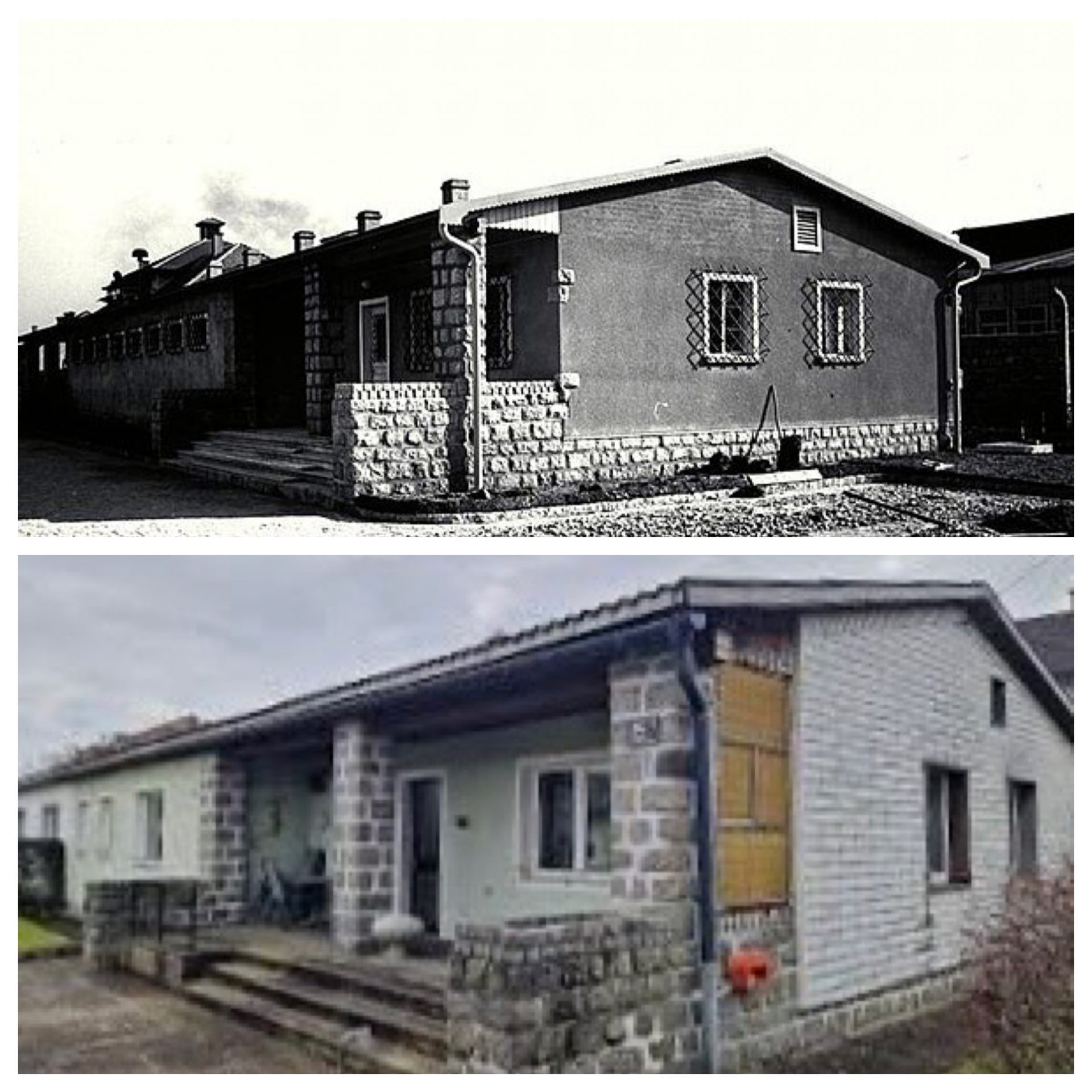
Unspoken History: The KZ Brothel in WWII at Gusen
To stand on the soil of the former Mauthausen/Gusen concentration camp complex is to confront the chillingly systematic nature of Nazi brutality. We walk past the looming stone quarries and barracks—spaces etched into our collective memory as symbols of suffering. Yet, some stories of Holocaust sexual exploitation remain buried deeper than others, shrouded in a silence born of shame. One such story is that of the Lagerbordell, the camp brothel. The history of WWII concentration camp brothels is a chapter so disturbing that for decades, it was all but erased from the narrative of the Third Reich.
Come and experience travel!
Personally designed, seamlessly delivered – your journey, our expertise!
We are a boutique travel agency and consultancy specializing in Hub & Spoke Tours across Central Europe, the Benelux and the Dolomites.
This silence was jarringly broken not by a historian’s discovery, but by a real estate listing that appeared online a few years ago. In the small Austrian town of Gusen, a house was advertised for sale, its description targeting history enthusiasts. The property, the ad noted, was a “house with a rich history.” That history, however, was one of state-enforced sexual slavery in Nazi camps. The building was the former brothel of the Gusen concentration camp, a place where the Nazi ideology of exploitation reached a new level of perversion.
This unsettling event forces us to look closer, to peel back the layers of willful forgetting and ask difficult questions. What was the purpose of these institutions? Who were the women forced into them? And why has their story been so persistently marginalized? As we explore the history of the Gusen brothel, we uncover a narrative that is not just about victimhood, but about the complex, cynical, and ultimately failed Nazi system of control.
Nazi Camp Brothels: A Cynical Tool of “Productivity”
The first concentration camp brothel was established at Mauthausen in 1942, with its auxiliary camp, Gusen, following suit. The official rationale for these SS brothels in WWII, propagated by SS leader Heinrich Himmler, was a grotesque application of business logic: to increase the productivity of the camp’s forced laborers. The idea was that by offering sexual access as a reward, privileged prisoners would be motivated to work harder, boosting the output of the armaments factories that fueled the German war machine.
This “incentive” was not for everyone. Access was a privilege reserved almost exclusively for “Aryan” prisoners—German criminals, political prisoners, and, most importantly, the Kapos. These prisoner functionaries collaborated with the SS to oversee other inmates. Jewish prisoners were strictly forbidden from entering, a prohibition rooted in the Nazis’ obsessive racial purity laws (Rassenschande or “race defilement”).
Come and experience travel!
We design bespoke travel experiences with a perfect balance of cultural depth, efficiency and comfort.
Specializing in seamless hub-and-spoke journeys, we create well-paced, immersive itineraries tailored to your interests.
The system operated on a coupon-based currency. Privileged prisoners could earn a voucher for a 15-minute visit. However, instead of fostering productivity, the brothels created a thriving black market within the camp’s grim prisoner hierarchy. Coupons became a form of currency, traded by the prisoner elite. The SS’s experiment in motivation failed; the promised increase in labor output never materialized. The system did not boost the war economy, but it did succeed in deepening the moral corruption among the prisoners themselves.
The Sonderbau: Architecture of Dehumanization in SS Brothels
The brothel at Gusen, known as the “Sonderbau” (special building), was a purpose-built structure, a grim example within the network of Third Reich camp brothels. It stood isolated from the main camp, enclosed by its own barbed-wire fence and illuminated by floodlights—a prison within a prison. The design was starkly functional. It contained a waiting room, a series of small, numbered rooms for the women, and a room for the SS guard who oversaw the sordid operation.
Each room was barely large enough for a bed, a stool, and a basin. The cold, clinical layout of this KZ brothel in WWII underscored its true purpose: it was not a place of intimacy, but a facility for processing human beings. The women were stripped of their names and assigned numbers, their bodies treated as commodities. This architectural dehumanization was key to the psychological warfare waged against them, designed to erase their identity and reduce them to mere instruments.
Ravensbrück and the Victims of Forced Prostitution in Concentration Camps
The women forced into sexual slavery came primarily from one place: Ravensbrück concentration camp, the largest for women in the Third Reich. These female prisoners in WWII were often political opponents, so-called “asocials” (a category including Roma women, sex workers, and lesbians), or individuals denounced for minor infractions. They were selected based on youth and perceived health, then shipped to camps like Mauthausen/Gusen, Auschwitz, and Buchenwald.
Come and experience travel!
Our expertise lies in uncovering authentic stories, hidden corners, and behind-the-scenes experiences that bring destinations to life.
We design customized mindful travel experiences that seamlessly integrate mindful eating and mindful indulgence. These experiences foster self-care and create transformational journeys that nurture mental well-being, promote sustainable travel, and strengthen family connections.
Their ordeal began with a delousing and a violating medical inspection. They were promised easier work, a lie that quickly unraveled. Once in the brothel, their lives were a regimented nightmare of forced prostitution in concentration camps. They had to service numerous men each evening, under the constant watch of the SS.
The consequences were devastating. A pregnant woman was typically sent back to Ravensbrück for a forced abortion, which means they were murdered in most of the case. If she contracted a venereal disease, she would have been experimented in lab before being murdered. There was no care, only a cold calculation of her “usefulness.” Once deemed unfit, she was discarded. An estimated 34,140 women were forced into this life across the network of military and camp brothels. Their individual stories as Holocaust survivors are largely lost, a testament to the shame and silence that followed them.
The Pink Triangle: Paragraph 175 and Holocaust Sexual Exploitation
The camp brothels also played a dark role in another chapter of Nazi persecution: the targeting of homosexual men. Under Paragraph 175 of the German criminal code, thousands of men were imprisoned in camps, forced to wear the infamous pink triangle. The SS, in its twisted view of “re-education,” sometimes forced these men to visit the brothels to “cure” them of their homosexuality.
This policy was another cruel form of psychological torture and Holocaust sexual exploitation. For men already brutalized for their identity, being forced into a sexual encounter with a woman was a violent attempt to enforce a norm and erase an identity deemed “deviant.” This layer of the brothel’s history reveals the intersection of misogyny and homophobia at the heart of Nazi ideology, where control was exerted over every aspect of human life.
Confronting a Difficult Past: The Legacy of Sexual Slavery in Nazi Camps
For decades after the war, the story of the Lagerbordellen was met with a wall of silence. The survivors, doubly stigmatized, rarely spoke of their experiences. Historians often overlooked this specific form of exploitation. It was a history deemed too shameful.
The recent sale of the former Gusen brothel building forces us out of this silence: „Building with a past for sale, ideal for those seeking a property with a rich history“. It reminds us that history lives in the very landscape around us, in ordinary-looking buildings that hold extraordinary pain. To understand a place like Mauthausen/Gusen fully is to confront its most uncomfortable truths about sexual slavery in Nazi camps.
This is why visiting these sites with expert guidance is crucial. It is about understanding the invisible systems and silenced stories that permeate the ground beneath our feet. It is about learning to read the landscape for clues—a lone building set apart, a forgotten foundation—and grasping the full history of what happened. By exploring the complete story of the KZ brothel in WWII, we not only honor all victims but also arm ourselves with a deeper understanding of the past, ensuring that such calculated cruelty is never forgotten.
Forced Prostitution in Nazi Concentration Camps
- Buchenwald Memorial: Camp Brothel
- Dachau Concentration Camp Memorial Site: The Camp Brothel
- Ravensbrück Memorial Museum
- Wikipedia: German camp brothels in World War II
- The Guardian: “The truth about the Nazi concentration camp brothels”
- Der Spiegel: “Concentration Camp Bordellos: ‘The Main Thing Was to Survive at All'”
- Project MUSE: “The Concentration Camp Brothel: Forced Sexual Labor under Nazi Rule”
- Gusen Memorial Committee: Prisoner Brothel
- Holocaust Encyclopedia: Ravensbrück
- History in Focus: Review of “The Camp Brothel”