

Experience Travel Inspiration
The Matriarch’s Blueprint: How Maria Theresia and Her Reforms Engineered Modern Austria
She lost a war, nearly lost her empire—then transformed European governance forever.
Planning a Vienna trip? Maria Theresia’s story unlocks what you’re actually seeing at Schönbrunn and the Hofburg. This article reveals how a 23-year-old woman dismissed as “unfit to rule” built the modern Austrian state—from compulsory education to healthcare reforms. Discover the surprising legacy (and darker truths) behind the empress whose innovations still shape Central Europe today.
by Long Lin-Maurer • December 31, 2025
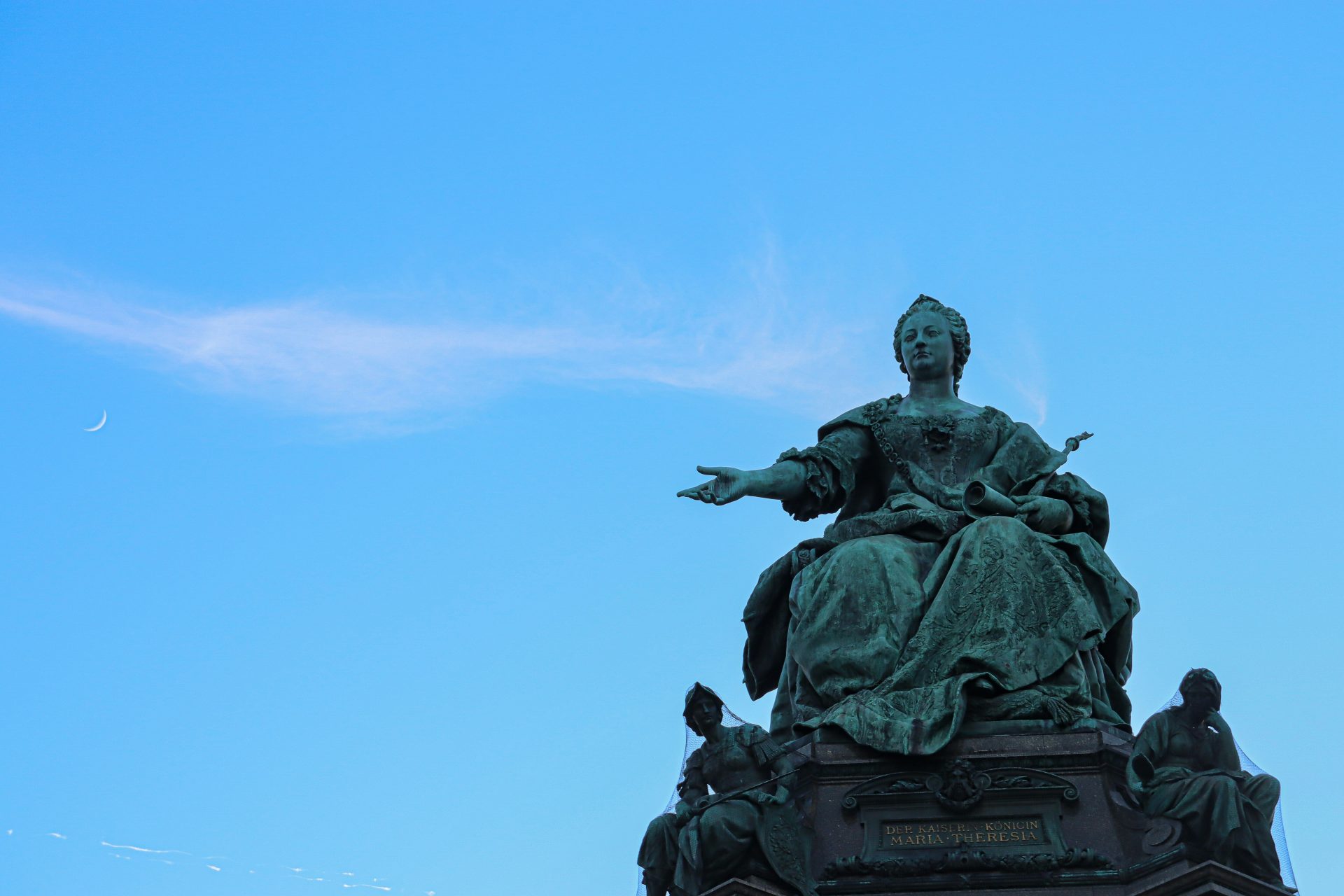
When walking through the grand halls of Schönbrunn Palace or standing before the imposing Hofburg in Vienna, visitors often sense the lingering presence of one remarkable woman who shaped not just Austria, but the very foundations of modern European governance. Maria Theresia and her reforms echo through the centuries, defining a reign that began with precarious uncertainty and ended in an era of stabilized power. Born on May 13, 1717, and reigning until 1780, she remains one of history’s most consequential figures—a ruler whose approach to Austrian enlightened absolutism challenges our understanding of 18th-century leadership.
A Woman in a World of Kings: Archduchess Maria Theresa
Maria Theresa holds a singular distinction in European history: she was the only female ruler of the Habsburg dynasty. When her father, Emperor Charles VI, died in 1740, the 23-year-old Archduchess Maria Theresa inherited a treasury depleted by war and an empire surrounded by enemies. The Pragmatic Sanction—a decree guaranteeing female succession—proved worthless the moment it was tested. Frederick II of Prussia invaded Silesia, igniting the War of Austrian Succession.
Come and experience travel!
Personally designed, seamlessly delivered – your journey, our expertise!
We are a boutique travel agency and consultancy specializing in Hub & Spoke Tours across Central Europe, the Benelux and the Dolomites.
Yet, the young monarch, dismissed by many as unfit to rule, defended her inheritance with unexpected tenacity. Though she never held the title of Holy Roman Empress in her own right—her husband Francis I and later her son Joseph II bore that crown—she was the de facto ruler. It was during this turbulent period that the necessity of Maria Theresia and her reforms became undeniably clear; survival depended on transforming a loose confederation of territories into a unified state.
The Architecture of Modern Governance and Centralized Bureaucracy
The loss of wealthy Silesia to Prussia convinced the Empress that the Habsburg monarchy required fundamental restructuring. Aided by key advisors like Count Friedrich Wilhelm von Haugwitz, she initiated a revolution in governance. Maria Theresa’s modernization efforts dismantled the patchwork of provincial authorities that had rendered administration chaotic.
In 1749, she established the Directorium in Publicis et Cameralibus, a centralized bureaucracy that unified political and financial affairs across her Austrian and Bohemian lands. This was a hallmark of Theresian administrative changes: replacing hereditary privilege with professional competence. She created a new class of civil servants answering directly to the crown, ensuring that state reforms in Austria penetrated from the palace down to the local district offices.
Forging Military Might and the Theresian Legal Code
Humiliated by Prussian military superiority, the Empress committed herself to building a professional standing army. Her military reorganization involved standardizing training and equipment, a massive shift from the prior reliance on mercenary forces. The Theresian Military Academy, founded in Wiener Neustadt in 1751, institutionalized officer training, producing commanders schooled in modern tactics.
Come and experience travel!
We design bespoke travel experiences with a perfect balance of cultural depth, efficiency and comfort.
Specializing in seamless hub-and-spoke journeys, we create well-paced, immersive itineraries tailored to your interests.
Alongside military strength, she sought to unify the legal landscape. The introduction of the Constitutio Criminalis Theresiana was a significant step toward a standardized penal code, although it still contained archaic elements. These legal and military moves required money, leading to a complete overhaul of the tax system. Maria Theresia and her reforms ensured that noble tax exemptions were reduced, and a general census—originally for military conscription—allowed for more efficient revenue collection.
Enlightenment in the Classroom: The General School Regulation
Perhaps no aspect of Austrian enlightened despotism proved more lasting than the transformation of education. In 1774, the General School Regulation (Allgemeine Schulordnung) made primary education compulsory for all children between ages six and twelve—boys and girls alike. This was a revolutionary concept in the 18th century, establishing literacy as a foundation of productive citizenship rather than a privilege of the elite.
The reform created a three-tiered system, from village “trivial schools” to teacher-training Normalschulen. While implementation faced resistance, this pillar of Maria Theresa’s policies laid the groundwork for a literate society and an educated workforce, crucial for the empire’s future economic development.
Public Health and the University of Vienna
In medicine, the Empress found her instrument of transformation in Gerhard van Swieten, a Dutch physician she brought to Vienna. He revolutionized the University of Vienna medical faculty, introducing clinical training at the bedside. Under his guidance and the Empress’s patronage, the groundwork was laid for the Vienna General Hospital.
Come and experience travel!
Our expertise lies in uncovering authentic stories, hidden corners, and behind-the-scenes experiences that bring destinations to life.
We design customized mindful travel experiences that seamlessly integrate mindful eating and mindful indulgence. These experiences foster self-care and create transformational journeys that nurture mental well-being, promote sustainable travel, and strengthen family connections.
Her commitment to public health was personal; she championed inoculation against smallpox, a disease that had ravaged her own family. By submitting her children to the procedure, she used her royal influence to promote medical science, a key trait of the Habsburg reforms during the Enlightenment era.
Commerce, Industry, and the Robot Patent
Maria Theresia and her reforms also embraced mercantilist principles to boost state power. She protected domestic industries with tariffs and improved infrastructure to facilitate trade. However, her economic vision extended to the social structure of the empire.
The Robot Patent of 1775 was a crucial intervention in the lives of the peasantry. It regulated the Robot (forced labor) that serfs owed to their lords, limiting exploitation. While not fully abolishing serfdom, this move demonstrated a shift toward state protection of the lower classes, reflecting the complex nature of 18th-century Austrian restructuring.
The Shadow of Intolerance
History demands honesty, and the legacy of Maria Theresa is not without its stains. Despite her progressive work in education and administration, she harbored virulent antisemitism. In 1744, she ordered the expulsion of Jews from Prague, a decree that uprooted thousands. This intolerance stands in stark contrast to the otherwise “enlightened” nature of Maria Theresia and her reforms, serving as a reminder that the modernization of the state did not always equate to social justice for all its inhabitants.
Walking in the Footsteps of an Empress
Today, Vienna remains a living museum of this transformative era. Schönbrunn Palace preserves the intimate spaces where the Queen of Hungary and Bohemia raised sixteen children while governing an empire. The enduring structures of Austrian public administration, education, and law still bear the imprint of her vision.
To understand the emergence of the modern Central European state, one must look closely at Maria Theresia and her reforms. From the Pragmatic Sanction that secured her throne to the administrative innovations that secured her state, her influence is inescapable. For those seeking to understand how the modern world emerged from the ambitions of the past, few historical journeys are as rewarding as exploring the legacy of the Habsburgs’ most formidable matriarch.
Selected Resources on Maria Theresa and the Austrian Enlightenment
- Encyclopædia Britannica: Maria Theresa
– A comprehensive academic overview of the Archduchess’s life, detailing her foreign policy, the War of the Austrian Succession, and her domestic administrative reforms. - The World of the Habsburgs: Maria Theresa
– A virtual exhibition by Schloß Schönbrunn Kultur- und Betriebsges.m.b.H. providing a curated biography and access to historical context regarding her reign and family life. - The World of the Habsburgs: Administrative Reforms
– A specific module detailing the “State Restructured,” focusing on the centralization of power, the Haugwitz revolution, and the modernization of Austrian bureaucracy. - The World of the Habsburgs: Educational Reform
– An in-depth look at the introduction of the Allgemeine Schulordnung (General School Regulations) in 1774, which established mandatory primary education in the Habsburg lands. - Schönbrunn Palace: The Epoch of Maria Theresa
– The official history of the imperial summer residence, analyzing how Maria Theresa used architecture and court culture to solidify her political standing and cultural heritage. - Encyclopedia.com: Maria Theresa
– A compilation of entries from the International Encyclopedia of the Social Sciences and other reference works, covering her economic policies and the Enlightened Absolutism era. - The Catholic Encyclopedia: Maria Theresa
– A historical perspective focusing on her relationship with the Catholic Church, her religious reforms, and her dealings with the Jesuits and ecclesiastical policies. - The Imperial Crypt (Kapuzinergruft): Maria Theresa
– Information from the official burial site of the Habsburgs, detailing the late baroque cultural significance of her monumental double sarcophagus and her dynastic legacy. - New World Encyclopedia: Maria Theresa of Austria
– An article organizing her legacy by military campaigns, family alliances, and the specific civil reforms regarding law and medicine (Van Swieten’s reforms). - ThoughtCo: Biography of Maria Theresa
– A structured guide to the key timeline events of her rule, emphasizing the pragmatic sanction and the societal shifts that occurred under her governance.
We look forward to hearing from you: