

Experience Travel Inspiration
Max Reinhardt: The Jewish Roots of the Salzburg Festival
What if the most “Austrian” cultural treasure was actually created by Jewish visionaries—artists who saw themselves as outsiders claiming their rightful heritage?
The Salzburg Festival’s founding story mirrors the journey many Jewish families experienced in Austria: emancipation, cultural contribution, then erasure. This article reveals how Max Reinhardt and Hugo von Hofmannsthal transformed their complex identities into enduring art—and why their legacy matters for understanding your own family’s Austrian roots.
by Long Lin-Maurer • March 28, 2026
Max Reinhardt, Schloss Leopoldskron, and the Jewish Roots of the Salzburg Festival
A Voice Echoes Across the Cathedral Square
On August 22, 1920, something extraordinary happened in the heart of Salzburg. As the afternoon sun cast long shadows across the Domplatz, a lone voice pierced the summer air: “Jedermann! Jedermann!” The cry seemed to emerge from the ancient stones themselves, bouncing off the baroque façade of the Cathedral, calling the wealthy protagonist to account for his life before God.
This was no ordinary theatrical performance. This was the birth of the Salzburg Festival—a cultural institution that would become synonymous with artistic excellence and Austria’s most prestigious calling card. Yet few visitors today understand that this magnificent festival, a quintessentially Austrian cultural treasure, was primarily conceived by its Jewish founders. These artistic visionaries saw in Austrian culture something worth celebrating and sharing with the world, a dream rooted in the complex history of Jewish life in the Habsburg Empire.
Come and experience travel!
Personally designed, seamlessly delivered – your journey, our expertise!
We are a boutique travel agency and consultancy specializing in Hub & Spoke Tours across Central Europe, the Benelux and the Dolomites.
The story of the Salzburg Festival is inseparable from the story of Jewish emancipation. It is a tale of cultural reinvention, of outsiders who became the most devoted custodians of Austrian identity, and ultimately, of a dream that survived even when its dreamers were driven away. The Jewish origins of the Salzburg festival are not a footnote but its foundational story.
The Festival’s Jewish Founders: Reinhardt, Hofmannsthal, and Strauss
The Salzburg Festival emerged from the creative collaboration of three men whose partnership reshaped European cultural life. They were Max Reinhardt, the theatrical revolutionary; Hugo von Hofmannsthal, the poet-librettist of exquisite refinement; and Richard Strauss, the composer whose operas defined the age. Together, they formed a trinity of genius that transcended religious and social boundaries.
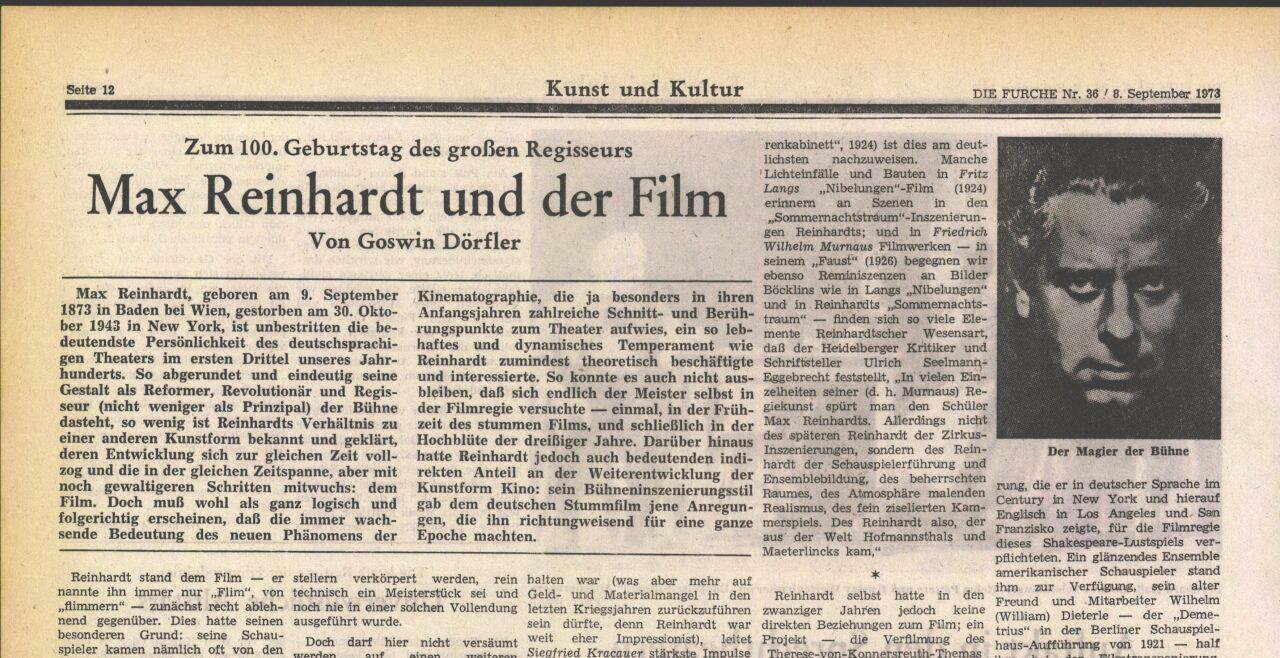
Visionary director Max Reinhardt, born Maximilian Goldmann in 1873 to a Jewish merchant family, had already transformed European theater by the time the Festival was conceived. His innovative staging techniques and mastery of space made him the most celebrated director of his era. This theatrical pioneer, by 1920, had directed over 450 productions and operated theaters across Central Europe.
Hugo von Hofmannsthal, born in 1874 to a Viennese family of mixed Jewish and Christian heritage, was the literary soul of the enterprise. Acutely aware of his complex identity, Hofmannsthal brought to the Festival his vision of theater as spiritual renewal, a communal ritual to heal a wounded civilization. His work is a cornerstone of the festival’s Jewish heritage.
Come and experience travel!
We design bespoke travel experiences with a perfect balance of cultural depth, efficiency and comfort.
Specializing in seamless hub-and-spoke journeys, we create well-paced, immersive itineraries tailored to your interests.
Richard Strauss, the only non-Jewish member of the founding triumvirate, was the most famous living composer in the German-speaking world. His collaboration with Hofmannsthal had produced masterpieces, and he brought immense musical prestige to the fledgling Festival. What bound them was a shared conviction that Austria—shattered by war—possessed cultural treasures that could serve as a beacon for civilization.
Jewish Emancipation and the Reinvention of Austria
To understand the immense Jewish contribution to the Salzburg Festival, one must understand the unique position of Jews in late Habsburg society. The Emancipation Laws of 1867 granted Jews full civil rights, unleashing an extraordinary flowering of talent in every field. Yet this acceptance was conditional. In response, many educated Jews embraced Austrian culture with passionate intensity, becoming its most devoted guardians.
This phenomenon explains why the most “Austrian” of cultural projects was conceived primarily by its Jewish founders. They were not appropriating a heritage but claiming the cultural patrimony emancipation had promised them. In celebrating Mozart, staging morality plays, and purchasing baroque palaces like Schloss Leopoldskron, they were asserting their rightful place in a culture they so deeply cherished.
The Salzburg Festival thus becomes an act of cultural citizenship. The choice of Jedermann—Hugo von Hofmannsthal’s adaptation of a medieval morality play—was hugely significant. Here was a Jewish poet reinterpreting Christian allegory, a powerful statement on the complex interplay of cultural identity central to the festival’s creation.
Come and experience travel!
Our expertise lies in uncovering authentic stories, hidden corners, and behind-the-scenes experiences that bring destinations to life.
We design customized mindful travel experiences that seamlessly integrate mindful eating and mindful indulgence. These experiences foster self-care and create transformational journeys that nurture mental well-being, promote sustainable travel, and strengthen family connections.
Schloss Leopoldskron: Reinhardt’s Palace and Artistic Vision
In 1918, two years before the inaugural season, Max Reinhardt acquired Schloss Leopoldskron, a magnificent rococo palace on the outskirts of Salzburg. Built in 1736, the palace had fallen into disrepair. Reinhardt saw in its faded grandeur the perfect setting for his cultural dreams.
Reinhardt’s palace became far more than a private residence. He transformed it into a salon for European intellectual life, a gathering place for the world’s greatest artists, writers, and thinkers. Reinhardt poured his fortune into restoring the Salzburg castle to its baroque splendor, filling it with art and theatrical treasures.
Leopoldskron Palace became the unofficial headquarters of the Festival, where artistic plans were hatched and the social dimension of the event unfolded. The palace also served a deeper purpose in Reinhardt’s vision, representing the possibility of Jewish integration into the highest levels of Austrian society through cultural achievement. That a Jewish theater director owned one of Salzburg’s most historic properties underscored the profound Jewish influence on the Salzburg festival.
The Festival Takes Root
The early years established patterns that would endure for a century. Jedermann became an annual tradition at the Domplatz, its drama heightened by the Cathedral’s spectacular façade. Opera followed, with the Salzburg Riding School, an unconventional space carved into a mountain, becoming a distinctive venue thanks to Reinhardt’s genius as a theatrical revolutionary.
Hofmannsthal contributed not only Jedermann but also Das Salzburger Grosse Welttheater, shaping the Festival’s identity as a profound, quasi-religious experience. Throughout the Roaring Twenties, the Festival, built upon its remarkable Jewish origins, grew into the cultural capital of the Western world for a few weeks each summer.
The Shadow Falls
The story of the Salzburg Festival cannot be told without its darkest chapter. The rise of Nazism threatened everything its founders had created. Reinhardt left for America in 1937, and a year later, the Nazi annexation of Austria led to the confiscation of his beloved Schloss Leopoldskron.
Reinhardt died in New York in 1943, his empire destroyed, Reinhardt’s palace in the hands of his persecutors. Under Nazi control, the Festival continued, but its soul was gone. The Jewish contribution to the Salzburg Festival was systematically erased from its official history.
Legacy of the Festival’s Jewish Heritage and Schloss Leopoldskron
After 1945, the Festival reclaimed its place as a premier cultural event. Leopoldskron Palace was returned to Reinhardt’s heirs and later became home to the Salzburg Global Seminar, an international non-profit organization. The palace gained unexpected fame as a filming location for The Sound of Music, its lakeside terrace recognizable to millions who have never heard of Max Reinhardt.
Today, the Festival acknowledges its founders, though the full story of Max Reinhardt, Schloss Leopoldskron, and the Jewish Roots of the Salzburg Festival remains underexplored. Few visitors realize that the traditions they witness emerged from the vision of Jewish artists who loved Austria enough to reinvent it. Their story offers profound lessons about cultural creation, belonging, and the resilience of artistic achievement. Understanding this legacy is essential to appreciating not just what happened in Salzburg, but why it still matters today.
Max Reinhardt, Schloss Leopoldskron, and the Jewish Roots of the Salzburg Festival
- Salzburg Festival – Official History
- Schloss Leopoldskron Palace – Salzburg.info
- United States Holocaust Memorial Museum – Max Reinhardt
- Encyclopaedia Britannica – Max Reinhardt
- Schloss Leopoldskron – Palace History
- Oxford Art Online – Max Reinhardt
- Jewish Heritage Europe – Jewish Roots of the Salzburg Festival
- City of Salzburg – Max Reinhardt Documentation
- JSTOR – The Salzburg Festival: Catholic Symbolism and Jewish Founders
- Centropa – Max Reinhardt Biography