

Experience Travel Insights
Secret Stories on Canvas: Uncovering the Petit Genre of The Netherlands in the 17th Century
by Long Lin-Maurer • December 4, 2025
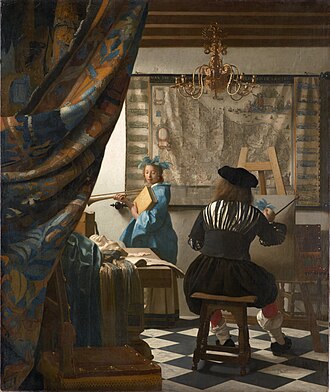
Whispers on Canvas: The Petit Genre of The Netherlands in the 17th Century
In the heart of the 17th century, the newly independent Dutch Republic was a marvel of prosperity, a global hub of trade and ideas. This Golden Age, fueled by unprecedented economic growth, gave rise to a confident and burgeoning class of middle-class patrons with a new appetite for art. But this was not an art of kings or popes. In a society shaped by Calvinist values, the demand shifted from grandiose religious scenes to something far more intimate: the celebration of the everyday. This new art form, the Petit Genre of The Netherlands in the 17th Century, held a mirror up to Dutch life, capturing its virtues and quiet moments with breathtaking realism. These remarkable Dutch scenes of daily life offer us more than just beautiful images; they are windows into the soul of a nation, telling stories that continue to resonate with captivating charm.
A New Republic, A New Art for the People
The birth of the Dutch Republic marked a radical shift in the art world. For the first time in history, artists were producing uncommissioned works for an open and competitive market, rather than relying on the patronage of the church or aristocracy. This created an explosion of artistic production, with an estimated five to ten million works created during the Dutch Golden Age. Homes of bakers and merchants were adorned with paintings, a testament to a society that deeply valued Netherlandish everyday life painting. This new class of patrons wanted to see their own lives, values, and world reflected on canvas. They sought art that was relatable, that celebrated their hard-won prosperity and the quiet virtues of domestic life. Artists responded by specializing in a variety of new genres, from landscapes and still lifes to these uniquely captivating scenes of daily existence.
The Allure of Dutch Scenes of Daily Life
17th-century Dutch genre painting depicts a startling variety of subjects, from a maid absorbed in her work to boisterous tavern scenes, from quiet domestic interiors to lively markets. Artists like Johannes Vermeer, Pieter de Hooch, Jan Steen, and Gerard ter Borch became masters of this new form, each bringing a unique perspective to the depiction of daily life. Vermeer, the “Sphinx of Delft,” was a master of light, creating tranquil and luminous interiors that seem to hold time captive. His works, like The Milkmaid, elevate a simple domestic task to a moment of profound dignity and beauty. De Hooch, another Delft master, was renowned for his serene and orderly compositions, often featuring doorways that lead the viewer’s eye through multiple rooms, creating a remarkable sense of harmony.
Come and experience travel!
Personally designed, seamlessly delivered – your journey, our expertise!
We are a boutique travel agency and consultancy specializing in Hub & Spoke Tours across Central Europe, the Benelux and the Dolomites.
In contrast to these quiet scenes, Jan Steen was the great storyteller of humorous, and often chaotic, domestic life. His lively paintings, such as The Dissolute Household, are filled with witty details and moralizing undertones, serving as amusing cautionary tales against excess and folly. Gerard ter Borch, on the other hand, specialized in jewel-like paintings of upper-class life, capturing the rich textures of satin gowns and the pensive moods of his subjects. The appeal of this seventeenth-century Dutch domestic art was the opportunity it afforded viewers to gaze into a private world, one that often reflected their own aspirations and values.
More Than Meets the Eye: Symbolism in Dutch Art
While these paintings appear to be straightforward depictions of reality, they are often layered with complex symbolism in Dutch art and subtle moral messages. Rooted in the Calvinist values of the time, which emphasized piety, humility, and the transience of earthly life, these hidden meanings would have been readily understood by a 17th-century audience. An overturned glass could signify the fleeting nature of pleasure, while a skull served as a memento mori, a reminder of mortality.
Even the most serene 17th-century Netherlandish genre scenes could contain a moral lesson. A woman delousing her child’s hair, as seen in a work by Pieter de Hooch, was not just a depiction of hygiene but a celebration of maternal care and the duty to nurture a child’s inner virtue. The meticulous cleanliness and order of many Dutch interiors were seen as reflections of moral uprightness. These paintings were not just decorative; they were visual lectures, meant to instruct and encourage reflection on proper conduct. They celebrated the home as a sanctuary of virtue, a fortress against the temptations of the outside world.
The Lasting Legacy of Dutch Golden Age Art
The art of the everyday in the Dutch Golden Age represents a pivotal moment in the history of Western art. It marked a definitive shift from the sacred to the secular, from the heroic to the humble. These artists—Vermeer, de Hooch, Steen, and their contemporaries—were pioneers, developing new levels of technical refinement, sophisticated use of perspective, and an unparalleled ability to capture the effects of light. They found beauty in the mundane and elevated the ordinary to the extraordinary.
Come and experience travel!
We design bespoke travel experiences with a perfect balance of cultural depth, efficiency and comfort.
Specializing in seamless hub-and-spoke journeys, we create well-paced, immersive itineraries tailored to your interests.
To gaze upon these works is to be transported to the bustling streets, quiet courtyards, and sunlit rooms of 17th-century Holland. They invite us to ponder the lives of the people depicted, to understand their values, and to appreciate the profound beauty they found in their everyday world. These whispers on canvas, captured with such skill and sensitivity, are more than just historical documents; they are timeless explorations of the human condition, celebrating the small moments that give life its richness and meaning. They remind us that the most profound stories can often be found in the most familiar of scenes, a lesson as relevant today as it was in the Dutch Golden Age.
Petit Genre of The Netherlands in the 17th Century
- Dutch Genre Painting in the 17th Century – The Metropolitan Museum of Art
An overview of genre painting during the Dutch Golden Age, exploring its themes, characteristics, and significant artists. - Dutch and Flemish Paintings – National Gallery of Art
Explores the broader context of Dutch Golden Age painting, including the prevalence and significance of genre scenes depicting everyday life. - Genre painting – Rijksmuseum
Showcases examples and descriptions of genre paintings from the Dutch Golden Age collection, highlighting various aspects of daily life captured by artists. - Genre Painting – Britannica
A concise definition and historical context of genre painting as a category of art, with specific reference to its flourishing in the Netherlands. - Dutch Golden Age Painting – Art History Archive
Provides an extensive article on Dutch Golden Age painting, dedicating sections to the importance and stylistic traits of genre works. - The Art of Genre Painting in the Dutch Golden Age – Essential Vermeer
Focuses on the characteristics and interpretations of genre painting through the lens of Johannes Vermeer and his contemporaries. - Genre Painting – Codart
A platform for curators of Dutch and Flemish art, offering insights and research on genre painting, often linking to academic papers and museum exhibitions. - Dutch Baroque Art: An Introduction – Smarthistory
An educational resource that introduces Dutch Baroque art, including the popular “petit genre” and its depiction of everyday scenes and domestic life. - Dutch and Flemish Paintings – The Courtauld Gallery
Details the collection of Dutch and Flemish paintings at The Courtauld, often including significant examples of 17th-century genre scenes with scholarly commentary. - Genre painting – Oxford Art Online (Grove Art Online)
A scholarly article from Grove Art Online (requires subscription or institutional access for full content) offering an in-depth academic perspective on the history and theory of genre painting, including its Dutch origins.