

Experience Travel Inspiration
From Bishop to Brand: The Surprising History of Santa Claus vs. Saint Nikolaus
What if the Santa you know is just a marketing invention?
For American travelers heading to Austria this December, the real St. Nikolaus tradition offers something our commercialized version lost centuries ago. Discover why December 6th—not the 25th—is the authentic celebration, what a terrifying horned beast called Krampus has to do with it, and how a 4th-century bishop became a Coca-Cola icon. This changes everything you thought you knew.
by Long Lin-Maurer • December 10, 2025
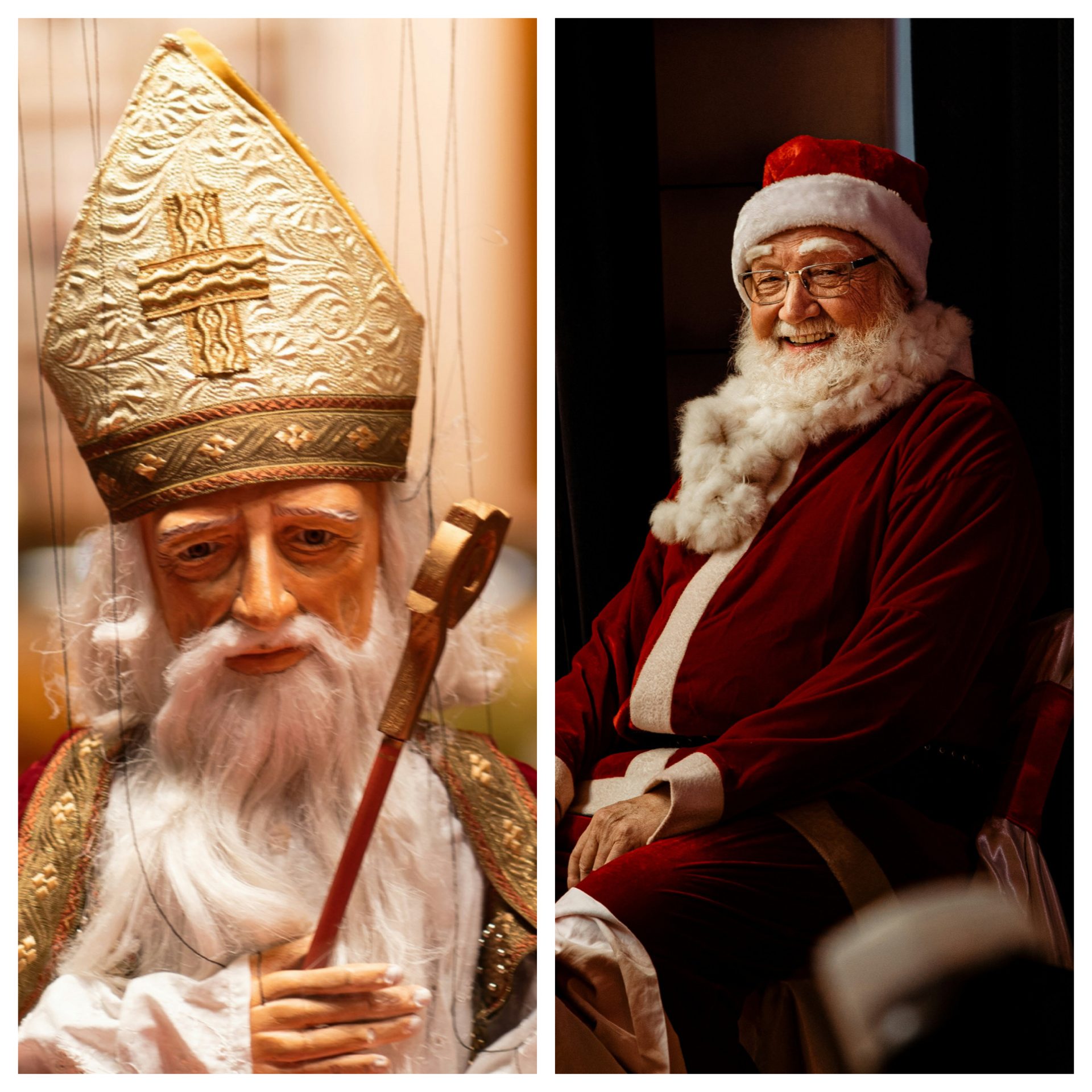
Santa Claus vs. Saint Nikolaus: Unraveling the Difference Between the Jolly Red Suit and the Bishop of Myra
The Great December Confusion
Every year, as winter descends upon the Northern Hemisphere, a familiar figure in red emerges in shopping malls, advertisements, and living rooms across America. The modern Santa, with his jolly laugh, flying reindeer, and workshop at the North Pole, has become synonymous with holiday magic. Yet few realize that this beloved character is actually a heavily commercialized descendant of a far more complex and historically significant figure. To truly understand the season, one must explore the fascinating dynamic of Santa Claus vs. Saint Nikolaus.
The difference between Santa and St. Nick represents more than just a linguistic variation or cultural footnote. It reveals a fascinating journey through religious history, European traditions, immigrant stories, and the transformation of sacred customs into secular phenomena. Understanding the Nikolaus vs. Santa distinction opens a window into the rich tapestry of Central European heritage, particularly in Austria, where December 6th traditions remain one of the most anticipated and authentically preserved celebrations of the winter season.
Come and experience travel!
Personally designed, seamlessly delivered – your journey, our expertise!
We are a boutique travel agency and consultancy specializing in Hub & Spoke Tours across Central Europe, the Benelux and the Dolomites.
The Historical Bishop of Myra: The True Origin
The story begins not in the snowy landscapes of Scandinavia or the imagined Arctic workshops, but in the sun-drenched Mediterranean region of what is now Turkey. The Bishop of Myra was a Greek Christian leader named Nikolaus who lived during the fourth century, around 270-343 CE. Born in Patara, a city in the ancient region of Lycia, he eventually became a bishop known for his extraordinary piety and generosity, particularly toward children and the poor.
Uncovering the origin of Santa Claus from Saint Nicholas requires looking at historical accounts describing him as a man who inherited considerable wealth and chose to distribute it among those in need. The most famous legend associated with him tells of a poor father with three daughters who could not afford dowries. According to tradition, Nikolaus secretly visited the family three nights in succession, throwing bags of gold through the window. This act became the template for the gift-giving origins that would eventually spread across Europe.
Nikolaus was canonized as a saint, and his feast day was established on December 6th. Over the centuries, his veneration spread from the Byzantine Empire throughout Europe, establishing him as the historical patron saint of children, sailors, and merchants.
Saint Nikolaus Day in Austria: A Living Tradition
In Austria and much of Central Europe, the contrast of Santa Claus compared to Saint Nicholas is stark. December 6th is not merely a date on the calendar but a significant cultural event that has been celebrated continuously for over a thousand years. Austrian Christmas customs offer a glimpse into medieval European practices that have survived remarkably intact despite the modernization that has transformed so many other traditions.
Come and experience travel!
We design bespoke travel experiences with a perfect balance of cultural depth, efficiency and comfort.
Specializing in seamless hub-and-spoke journeys, we create well-paced, immersive itineraries tailored to your interests.
The celebration begins on the evening of December 5th, known as Krampusnacht. Here, the Old World Saint vs. New World Santa dichotomy is most visible. Saint Nikolaus appears dressed not in the familiar commercial imagery, but in the traditional vestments of a bishop—a long flowing robe, a mitre (tall pointed hat), and carrying a crozier.
This visual representation marks a dramatic departure from the American conception. When analyzing European Saint Nicholas vs American Santa, the former is an unmistakably religious figure. His demeanor is dignified and paternal rather than jovially commercial. He speaks to children about their behavior, consulting a golden book of deeds. The gifts he brings are modest and symbolic—nuts, oranges, and chocolate. This tradition of leaving shoes to be filled hearkens back centuries and represents the root of the Sinterklaas and Santa Claus comparison.
The Dark Companion: Krampus and Alpine Folklore
Perhaps no aspect of the Austrian tradition surprises visitors more than the presence of Krampus, the fearsome companion who accompanies the benevolent saint. While Father Christmas versus Saint Nikolaus is a common debate, neither usually includes a horned beast in the UK or US. Yet in the Alpine region, the Krampus run (Krampuslauf) is essential. While Saint Nikolaus rewards good children, Krampus—a terrifying figure with horns and fur—represents the consequence for misbehavior.
This Alpine folklore celebration combines reward with admonition. The Krampus tradition has pre-Christian roots, drawing from pagan customs incorporated into Christian observance. During Krampusnacht, young men don elaborate handcrafted masks and costumes, running through the streets. These runs have become significant cultural events in their own right. The craftsmanship required to create these masks represents a living folk art tradition that thrives in Austrian communities, adding a layer of depth to the St. Nikolaus against Santa narrative.
Come and experience travel!
Our expertise lies in uncovering authentic stories, hidden corners, and behind-the-scenes experiences that bring destinations to life.
We design customized mindful travel experiences that seamlessly integrate mindful eating and mindful indulgence. These experiences foster self-care and create transformational journeys that nurture mental well-being, promote sustainable travel, and strengthen family connections.
The American Transformation: Dutch Sinterklaas Roots to Coca-Cola
The journey of Santa Claus vs. Saint Nikolaus is ultimately a story of immigration and commercial innovation. When settlers with Dutch Sinterklaas roots arrived in New Amsterdam—later New York—they brought with them their traditions. English-speaking Americans adapted the name “Sinterklaas,” gradually transforming it into “Santa Claus.”
Throughout the nineteenth century, the image shifted. Washington Irving’s satire and Clement Clarke Moore’s “A Visit from St. Nicholas” began reshaping the figure. However, the definitive wedge in the St. Nikolaus vs. Santa distinction was driven by commercial artists. The Coca-Cola Santa image of the 1930s standardized the red and white suit and cheerful, grandfatherly appearance. The religious elements were stripped away, shifting the celebration from December 6th to December 25th, turning a contemplative bishop into a magical gift-bringer.
Why the Distinction Matters
Understanding the mechanics of Santa Claus vs. Saint Nikolaus is not merely an exercise in historical curiosity. It represents an opportunity to engage with authentic cultural heritage often absent from the commercialization of Christmas. The Austrian tradition invites reflection on values—generosity, kindness, accountability—rather than simply anticipating material gifts.
For travelers seeking experiences beyond the superficial, witnessing the difference between Santa and St. Nick firsthand in Austria provides genuine insight. The tradition demonstrates how religious observance, folk custom, and community celebration can coexist. From the atmospheric Christmas markets to the Krampus run that transforms village streets into theaters of folklore, December in Austria provides layers of experience that satisfy both intellectual curiosity and emotional engagement.
The Deeper Journey
The story of the Bishop of Myra ultimately invites a broader exploration of Central European cultural heritage. Austria’s position as a repository of traditions—Roman, Germanic, and Habsburg—keeps December 6th traditions meaningful.
For those who have grown up with the American icon, exploring Santa Claus vs. Saint Nikolaus offers a moment of recognition and revelation. It transforms a simple holiday tradition into a gateway for exploring how cultures evolve. Whether in the grand imperial spaces of Vienna or the intimate village squares of Alpine Austria, the celebrations surrounding Saint Nikolaus Day offer not just visual spectacle but genuine cultural immersion—a definitive answer to the contrast of Traditional Bishop vs. Jolly Red Suit.
Historical and Cultural Resources: Saint Nicholas vs. Santa Claus
- Encyclopaedia Britannica: Saint Nicholas – A scholarly biography detailing the life of the 4th-century Bishop of Myra, the historical figure upon whom the modern folklore is based.
- St. Nicholas Center: Saint Nicholas & Santa Claus – A comprehensive non-profit resource dedicated to distinguishing the traditional Christian saint from the secular pop-culture figure, including historical timelines.
- History.com: Santa Claus Origins – A historical overview tracing the evolution of the legend from the acute piety of St. Nicholas to the Dutch Sinterklaas and the Americanized Santa Claus.
- National Geographic: From St. Nicholas to Santa Claus – An analysis of how the historical bishop transformed into the North Pole figure, utilizing historical records and cultural studies.
- Austria.info: Austrian Advent Traditions – Official cultural information from the Austrian Tourist Office explaining local customs, specifically the distinct roles of Saint Nicholas (Nikolo) and the Krampus, as opposed to Santa Claus.
- Deutsche Welle: Santa Claus vs. St. Nicholas – A cultural analysis of the Germanic distinction between the two figures and the resistance in German-speaking countries against the “Americanization” of Christmas customs.
- Smithsonian Magazine: How Thomas Nast Created the Modern Image of Santa Claus – An article examining the 19th-century visual shift from a religious bishop to the secular, jolly figure depicted in Harper’s Weekly.
- BBC Religions: Saint Nicholas – An educational profile covering the hagiography of the saint, his patronage, and the legends of the three dowries that inspired gift-giving traditions.
- The Local Austria: Who is Saint Nicholas and how do Austrians celebrate him? – A specific look at the celebration of “Nikalo” in Vienna and Austria on December 6th, highlighting the cultural separation from the Christmas Eve gift-bringer (the Christkind).
- Biography.com: Saint Nicholas – A detailed profile of the Greek Orthodox bishop, examining the factual history versus the accumulation of myths that bridge the gap to the modern Santa.