

Experience Travel Inspiration
Schönbrunn Palace Vienna (2026): The Ultimate Guide to History, Gardens & Zoo
What if your first Vienna experience could rival visiting Versailles—but with fewer crowds and more secrets?
Schönbrunn Palace isn’t just another European Palace —it’s place designed for children, where 11 princes and princesses grew up and Napoleon’s son lived as a gilded prisoner and where the world’s first “theme park” educated future emperors. This guide reveals why 4+ million visitors flock here annually, plus insider tips for experiencing the palace like Habsburg royalty did.
by Long Lin-Maurer • March 21, 2026
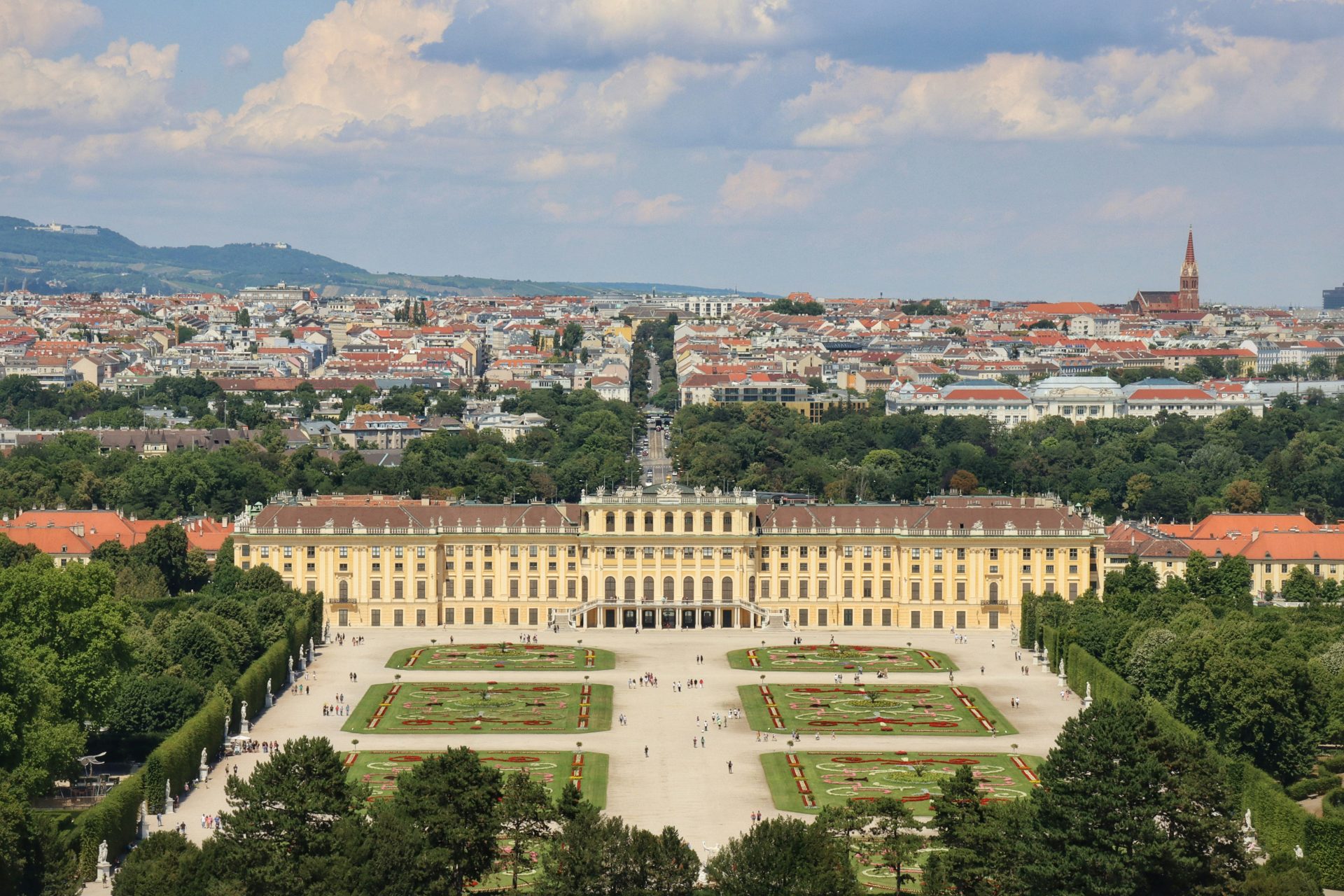
Schönbrunn Palace: Where Imperial Grandeur Meets Fairytale Fantasy
Vienna’s crown jewel rises majestically on the western edge of the city, a symphony in Habsburg yellow that has witnessed the rise and fall of empires. Schönbrunn Palace stands not merely as a monument to imperial power but as a living chronicle of European history, where every gilded room whispers secrets and every path in the palace gardens leads to discovery. For first-time visitors to the capital, this UNESCO World Heritage Site offers an incomparable gateway into understanding the soul of Austria. Often referred to locally as Schloss Schönbrunn, the estate remains the defining symbol of the dynasty that shaped modern Europe.
The Scale of the Baroque Complex
The sheer scale of Schönbrunn Palace defies casual comprehension. Sprawling across approximately 160 hectares, the royal estate rivals the entire Principality of Monaco in size—a fact that often leaves visitors astonished. The main building contains 1,441 rooms, of which 45 are open to the public, including 22 rooms that preserve the original Baroque interiors, known as the famous Schönbrunn Style.
Come and experience travel!
Personally designed, seamlessly delivered – your journey, our expertise!
We are a boutique travel agency and consultancy specializing in Hub & Spoke Tours across Central Europe, the Benelux and the Dolomites.
The grounds extend nearly 1.2 kilometers from the main structure to the Gloriette monument on the hill, with the Neptune Fountain marking the visual midpoint of this carefully orchestrated landscape. Annual visitor numbers consistently exceed four million, making this Habsburg summer residence Austria’s most visited cultural attraction. The property was recognized by UNESCO in 1996 as an outstanding Baroque complex and a testament to the exchange of human values. The famous Privy Garden alone contains more than 32 flower bed designs, requiring the cultivation of over 88,000 plants annually to maintain its historical appearance.
From Hunting Grounds to Imperial Palace in Vienna
The story of the palace begins not with golden ballrooms but with the primal pursuit of the hunt. In 1569, Emperor Maximilian II (cousin of Spanish King Philipp II.) acquired the property, then a modest estate called Katterburg. The name “Schönbrunn” derives from a “beautiful spring” (schöner Brunnen) discovered on the property. However, it would take centuries for the hunting lodge to evolve into the premier imperial palace in Vienna.
The Habsburg passion for hunting represented a fundamental aspect of aristocratic identity. Hunting served multiple purposes for ruling classes: it provided military training, reinforced social hierarchies, and offered diplomatic opportunities. For the Habsburgs, vast hunting estates symbolized their dominion over the land. While the modern Schönbrunn Palace is known for luxury, its roots are deeply embedded in this rugged tradition.
A Viennese Historical Site to Rival Versailles
The late seventeenth century witnessed a transformation in European architecture, driven by Louis XIV’s creation of Versailles (a brother in law of Emperor Leopold I.). The Habsburg response was to commission the architect Johann Bernhard Fischer von Erlach to design a residence that would rival the French king’s achievement. His original 1693 design positioned a grandiose castle dramatically atop the hill.
Come and experience travel!
We design bespoke travel experiences with a perfect balance of cultural depth, efficiency and comfort.
Specializing in seamless hub-and-spoke journeys, we create well-paced, immersive itineraries tailored to your interests.
This concept represented the birth of Schönbrunn Palace as Versailles’s Austrian rival, developing on the foundation of the already existing Lustschloss – a “Pleasure Palace”. It embodied the belief that rulers deserved earthly paradises reflecting their divine right to reign, setting the stage for the site to become a crucial Austrian cultural monument.
Maria Theresa’s Residence: A Living Classroom
The transformation of the estate owes everything to Empress Maria Theresa. As the mother of sixteen children, she needed a Maria Theresa’s residence that could accommodate her enormous family (she gave birth to 16 children, out of which 11 survived) while providing an ideal environment for raising future rulers. Beginning in 1743, she commissioned a remodel that turned the site into a home. The Rococo architecture of the interiors became brighter and more playful, while the outdoors evolved into an educational wonderland.
Maria Theresa commissioned gardens that functioned as living classrooms. The Roman Ruins, constructed in 1778, taught children about the rise and fall of empires. Statues depicting Greek and Roman deities introduced classical mythology and achievements of Roman Empire into one lesson. The Egyptian obelisk connected young minds to ancient civilizations. This approach essentially created the world’s first theme park—an immersive educational environment where aristocratic children could learn through exploration.
Schönbrunn Zoo: Where the imperial menagerie spoke the language of diplomacy
In 1752, Emperor Franz I Stephan established the menagerie, now known as Tiergarten Schönbrunn and recognized as the world’s oldest continuously operating zoo. The original design featured thirteen animal enclosures arranged around a central pavilion where the imperial family could breakfast while observing exotic creatures.
Come and experience travel!
Our expertise lies in uncovering authentic stories, hidden corners, and behind-the-scenes experiences that bring destinations to life.
We design customized mindful travel experiences that seamlessly integrate mindful eating and mindful indulgence. These experiences foster self-care and create transformational journeys that nurture mental well-being, promote sustainable travel, and strengthen family connections.
The creation of an imperial menagerie carried profound symbolic significance. Bringing animals from distant continents demonstrated the reach of the Habsburg far beyond European borders. Each exotic creature represented diplomatic connections and colonial ambitions. Today, the zoo continues its tradition of conservation and education, serving as a major draw within the wider palace complex.
Imperial Apartments and Architectural Splendor
The interior style of Schönbrunn Palace represents the apex of Rococo design tempered by Habsburg restraint. Unlike the overwhelming opulence of Versailles, the interiors here achieve grandeur through proportion and light. Highlights include the Great Gallery, where mirrors multiply candlelight into infinite reflections, and the Million Room, paneled in rare rosewood.
The Vieux-Laque Room showcases Chinese lacquer panels, reflecting the eighteenth-century European fascination with Asian aesthetics. These imperial apartments and ceremonial halls influenced decorative arts across Europe. The blend of white and gold, accented by rich red textiles, creates spaces that feel simultaneously regal and welcoming to the millions who take guided tours through the splendid corridors.
A Young Eagle’s Cage in the Grandiose Castle
One of the most poignant stories involves Napoleon II, grandly known as the Duke of Reichstadt. The legitimate son of Napoleon Bonaparte was raised essentially as a prisoner within the gilded walls of Schoss Schönbrunn. Despite his imperial blood, he lived a confined existence under the supervision of his grandfather.
Visitors can explore the room where the young duke died of tuberculosis in 1832. His death mask and personal effects tell the story of a prince caught between two empires. It is a reminder that this Viennese historical site was not just a place of celebration, but also of personal tragedy and political maneuvering.
Fairytales Born of the Palace Gardens
The imagery of Schönbrunn Palace profoundly influenced nineteenth-century storytellers. The palace gardens—with their mysterious grottos, artificial ruins, and the Gloriette monument perched like a crown on the hill—provided visual vocabulary for fairytales featuring enchanted castles.
The concept of the pleasure palace as a realm apart from ordinary life found its way into European folklore. Walking through the grounds today, visitors often experience uncanny recognition, as if stepping into stories by the Brothers Grimm. The carefully manicured landscapes remain one of the finest examples of a Baroque complex garden in existence.
The Schönbrunn Palace Court of Honor Experience
Beginning a tour from the Court of Honor offers visitors the authentic arrival experience of imperial guests. This approach recreates the journey designed by architects: the gradual revelation of grandeur. From this vantage point, the full symmetry of Schönbrunn Palace unfolds, its yellow façade glowing against Vienna’s sky. This ceremonial approach transforms a simple visit into an emotional journey through time, confirming the palace’s status as a premier Austrian cultural monument.
Historical and Cultural Resources: Schönbrunn Palace
- UNESCO World Heritage Centre: Palace and Gardens of Schönbrunn
The official entry for the site on the World Heritage List, detailing the Outstanding Universal Value, history, and protection strategies of this Baroque ensemble. - Schloß Schönbrunn: Historical Timeline
A comprehensive history provided by the palace administration, covering the estate’s evolution from the Katterburg to the imperial summer residence and the end of the monarchy. - The World of the Habsburgs: Schönbrunn Palace
A digitally curated historical exhibition exploring the construction, court life, and political significance of the palace within the context of the Habsburg Dynasty. - Austria-Forum AEIOU Encyclopedia: Schönbrunn Palace
An academic online reference work providing specific data on the architects (Fischer von Erlach, Pacassi), the interior rococo design, and the surrounding structures. - Austrian Federal Gardens: Schönbrunn Palace Gardens
Information from the government agency responsible for the botanical care of the site, detailing the landscape architecture, the Great Palm House, and the historic layout of the park. - Google Arts & Culture: Schloss Schönbrunn
A collaborative digital collection featuring high-resolution imagery of the palace staterooms, art collections, and virtual tours of the imperial apartments. - Encyclopedia Britannica: Schönbrunn Palace
A scholarly overview of the palace’s architectural style, its geographical setting in Vienna, and its historical function as the summer residence of the Austrian emperors. - Imperial Carriage Museum Vienna: History of the Collection
Details on the museum located within the Schönbrunn grounds (Winter Riding School), which houses the historic carriage fleet of the Viennese court. - Tiergarten Schönbrunn: History of the Menagerie
Documentation regarding the origins of the world’s oldest zoo, founded by Emperor Francis I Stephen in 1752 as part of the palace’s garden complex. - Burghauptmannschaft Österreich: Schlosshauptmannschaft Schönbrunn
Information from the Austrian federal entity responsible for the building management, preservation, and administration of the historic palace complex.