

Experience Travel Insights
Stop Losing Margin to TOMS: A B2B Guide to 100% VAT Recovery for EU Events
What if your DMC’s tax structure is silently eroding your margins?
For event companies and corporate travel organizers, the EU’s VAT margin scheme can turn supplier taxes into hidden costs you’ll never recover. This article reveals how Articles 306–310 impact B2B partnerships—and why providers offering self-performed services under reverse charge deliver measurably better value. Discover the structural difference that separates cost-efficient partnerships from margin-draining ones.
by Long Lin-Maurer • March 22, 2026
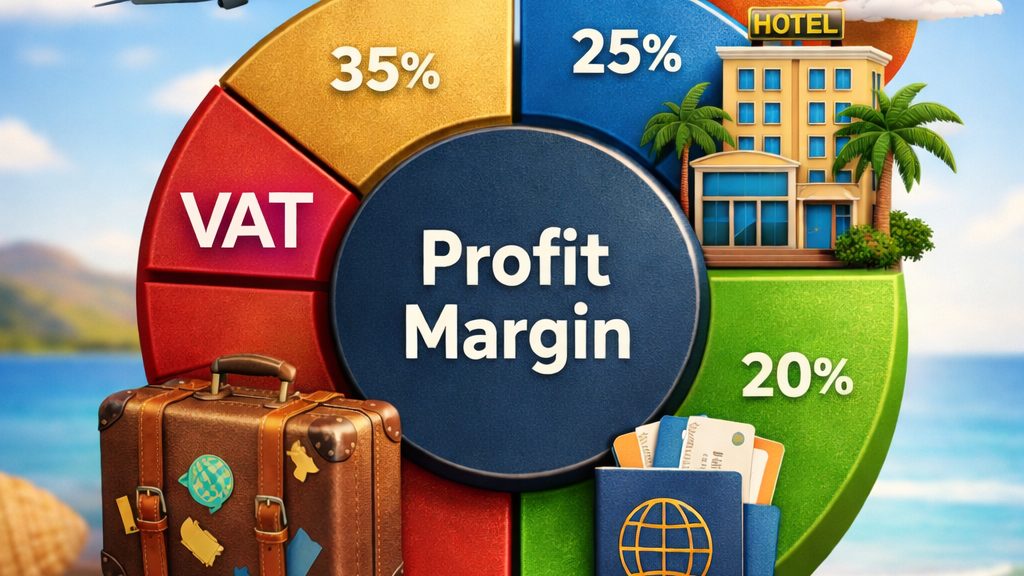
Navigating Articles 306–310 of VAT Directive 2006/112/EC: How EU Travel Laws Shape B2B Partnerships
The European travel industry operates within one of the most sophisticated regulatory frameworks in the world. For event companies, destination management companies (DMCs), and corporate travel organizers, understanding the intricate web of indirect taxation in the travel industry is not merely an administrative concern—it is a strategic imperative. At the core of this landscape, the influence of packaged travel law and Articles 306–310 of VAT Directive 2006/112/EC directly impacts profitability, competitive positioning, and partnership structures.
These regulations create a complex terrain for B2B operations that demands careful navigation. While designed to simplify taxation for consumer-facing agencies, the VAT Directive 2006/112/EC travel provisions often present challenges for business-to-business transactions that require informed strategic decision-making.
Come and experience travel!
Personally designed, seamlessly delivered – your journey, our expertise!
We are a boutique travel agency and consultancy specializing in Hub & Spoke Tours across Central Europe, the Benelux and the Dolomites.
The Historical Foundation of the Special VAT Scheme for Travel Agents
The special VAT scheme for travel agents emerged from a fundamental challenge: how to fairly tax services that span multiple jurisdictions without causing administrative chaos. When a German tour operator purchases hotel accommodations in Austria, ground transportation in Italy, and guided tours in Switzerland, applying standard VAT rules would typically create a bureaucratic nightmare regarding cross-border compliance.
The European Commission’s solution is the EU Tour Operators Margin Scheme (TOMS), codified in Articles 306–310. Under this Articles 306–310 regulatory framework, travel agents pay VAT only on their profit margin—the difference between what they charge clients and what they pay suppliers—rather than on the full value of the services sold.
Austria implemented these provisions through Section 23 of the 1994 VAT Act, while Germany codified them in Section 25 UStG and margin taxation rules. These national implementations adhere to the same EU travel service taxation laws, yet they contain subtle variations that sophisticated B2B partners must understand when structuring cross-border arrangements.
Understanding Input Tax Deduction Prohibition and Margin Mechanics
The margin scheme applies specifically to taxable persons acting in their own name vis-à-vis travelers, purchasing a supply of goods and services for travelers from third parties. While this definition seems straightforward, the VAT rules for packaged travel contain crucial nuances.
Come and experience travel!
We design bespoke travel experiences with a perfect balance of cultural depth, efficiency and comfort.
Specializing in seamless hub-and-spoke journeys, we create well-paced, immersive itineraries tailored to your interests.
When a DMC bundles various services—accommodation, transport, and meals—into a package, the margin scheme typically applies. The operator calculates the margin and applies the VAT rate of their establishment country. However, regarding the purchased input services, input tax deduction prohibition is enforced. The supplier’s VAT remains embedded in the cost, invisible to the final calculation but very real in its financial impact.
This inability to deduct input tax represents the most significant commercial implication of the influence of packaged travel law and Articles 306–310 of VAT Directive 2006/112/EC. A DMC operating under traditional structures absorbs supplier VAT as a pure cost, unable to recover it through the standard credit mechanism that characterizes normal B2B transactions.
The Reverse Charge Mechanism in Tourism: A Structural Alternative
Beyond the margin scheme exists an alternative that facilitates better B2B cross-border VAT compliance: the provision of travel-related services as direct, own-account services rather than bundled packages. This distinction fundamentally alters the tax treatment.
When a provider delivers self-performed travel services—such as passenger transport or specific consulting—based on appropriate business licenses, these fall under general VAT provisions. This structural difference opens the door to the reverse charge mechanism in tourism for transactions with foreign business partners.
Come and experience travel!
Our expertise lies in uncovering authentic stories, hidden corners, and behind-the-scenes experiences that bring destinations to life.
We design customized mindful travel experiences that seamlessly integrate mindful eating and mindful indulgence. These experiences foster self-care and create transformational journeys that nurture mental well-being, promote sustainable travel, and strengthen family connections.
Under reverse charge, the service recipient accounts for VAT. A German event company engaging Austrian ground services receives an invoice without Austrian VAT. They self-assess the VAT and simultaneously claim it as input tax. This ensures fiscal optimization for event planners, as the German company maintains full input tax recovery rights, unlike under the margin scheme.
Fiscal Optimization for Event Planners and Corporate Organizers
Consider the financial mathematics regarding corporate incentive travel taxation. When engaging a DMC under the margin scheme, the price includes embedded, non-recoverable VAT. The gross cost equals the net cost for the purchasing business.
Contrast this with engaging a provider operating under general VAT rules. The provider invoices without VAT, and the corporate client self-assess and deducts the tax immediately. This approach supports fiscal optimization for event planners by ensuring the net VAT impact is zero.
For corporate clients, this structural advantage is significant. Components like ground transportation or expert-led excursions, when delivered under general VAT rules, contribute to superior cost efficiency compared to traditional arrangements governed by Articles 306–310 of VAT Directive 2006/112/EC.
Quality and Compliance in Self-Performed Travel Services
The advantages of avoiding the margin scheme cannot exist without genuine substance. Self-performed travel services require that the provider actually delivers the service rather than just intermediating.
Legitimate self-performance requires appropriate business licenses and direct operational responsibility. In Austria, this means holding a proper “Gewerbeberechtigung.” A Destination Management Company (DMC) tax structure that claims self-performance but relies entirely on subcontractors risks reclassification under the margin scheme, triggering potential penalties.
This requirement creates a natural quality filter. Providers structured for VAT efficiency through self-performance necessarily maintain higher service standards. They cannot rely on passive intermediation because the EU travel service taxation laws demand active, qualified engagement.
Package Travel Directive Tax Implications and Consumer Protection
Parallel to VAT, the EU Package Travel Directive imposes obligations when services combine into a legal package. The Package Travel Directive tax implications are distinct from consumer protection rules, yet the definitions influence how authorities view service combinations.
A provider offering distinct services, each invoiced separately, presents a clearer case for general VAT treatment than one bundling everything into a single price. This is the difference between a single service vs. travel package.
Sophisticated partners understand the influence of packaged travel law and Articles 306–310 of VAT Directive 2006/112/EC on these definitions. Careful attention to contract structures and invoicing protects both parties while optimizing fiscal outcomes.
Strategic VAT Directive 2006/112/EC Travel Provisions in DMC Selection
When evaluating partners, the Destination Management Company (DMC) tax structure deserves equal consideration alongside service quality. Questions must extend to how services are delivered and invoiced.
Does the potential partner understand 2006/112/EC Directive Article 306? Do they operate exclusively within the margin scheme, or can they offer self-performed travel services under reverse charge eligibility?
Providers who have invested in understanding B2B cross-border VAT compliance demonstrate professionalism that correlates with execution quality. They offer measurably superior value through structural intelligence.
Conclusion: Expertise Enables Efficiency
The intersection of EU travel service taxation laws, the margin scheme, and general VAT provisions creates an environment where informed choices yield benefits. For industry professionals, mastering the influence of packaged travel law and Articles 306–310 of VAT Directive 2006/112/EC transforms compliance from a burden into an opportunity.
The most valuable partners combine local knowledge with regulatory sophistication, delivering experiences through structures that respect the Articles 306–310 regulatory framework while maximizing efficiency. In Central Europe, this combination creates partnerships worth developing, ensuring every detail—visible and invisible—receives the attention it deserves.
Legal and Regulatory Frameworks: Packaged Travel and the VAT Special Scheme (TOMS) in Austria and the EU
- Council Directive 2006/112/EC of 28 November 2006 on the common system of value added tax
- Directive (EU) 2015/2302 on package travel and linked travel arrangements
- European Commission: Provision of tourism services under the special VAT scheme for travel agents
- Study on the review of the VAT Special Scheme for Travel Agents
- CJEU Case C-293/11: European Commission v Republic of Austria
- Federal Act on Package Travel and Linked Travel Arrangements (Pauschalreisegesetz – PRG)
- Report from the Commission to the European Parliament and the Council on the application of Directive (EU) 2015/2302
- Guidelines resulting from meetings of the VAT Committee
- European Commission: New consumer rights for package travel
- European Parliament Briefing: Revision of the Package Travel Directive