

Experience Travel Insights
Austria’s Living Classroom: Where History Becomes a Multi-Generational Adventure.
What if the palace garden your kids explore was literally designed as a classroom—by an empress teaching her 16 children?
Austria transforms homeschool history from textbook chapters into living lessons where your whole family learns together. Discover how Schönbrunn’s fountains teach Greek mythology through Roman engineering, why Vienna’s “fake ruins” spark critical thinking, and how to navigate difficult 20th-century history with age-appropriate depth.
by Long Lin-Maurer • January 11, 2026
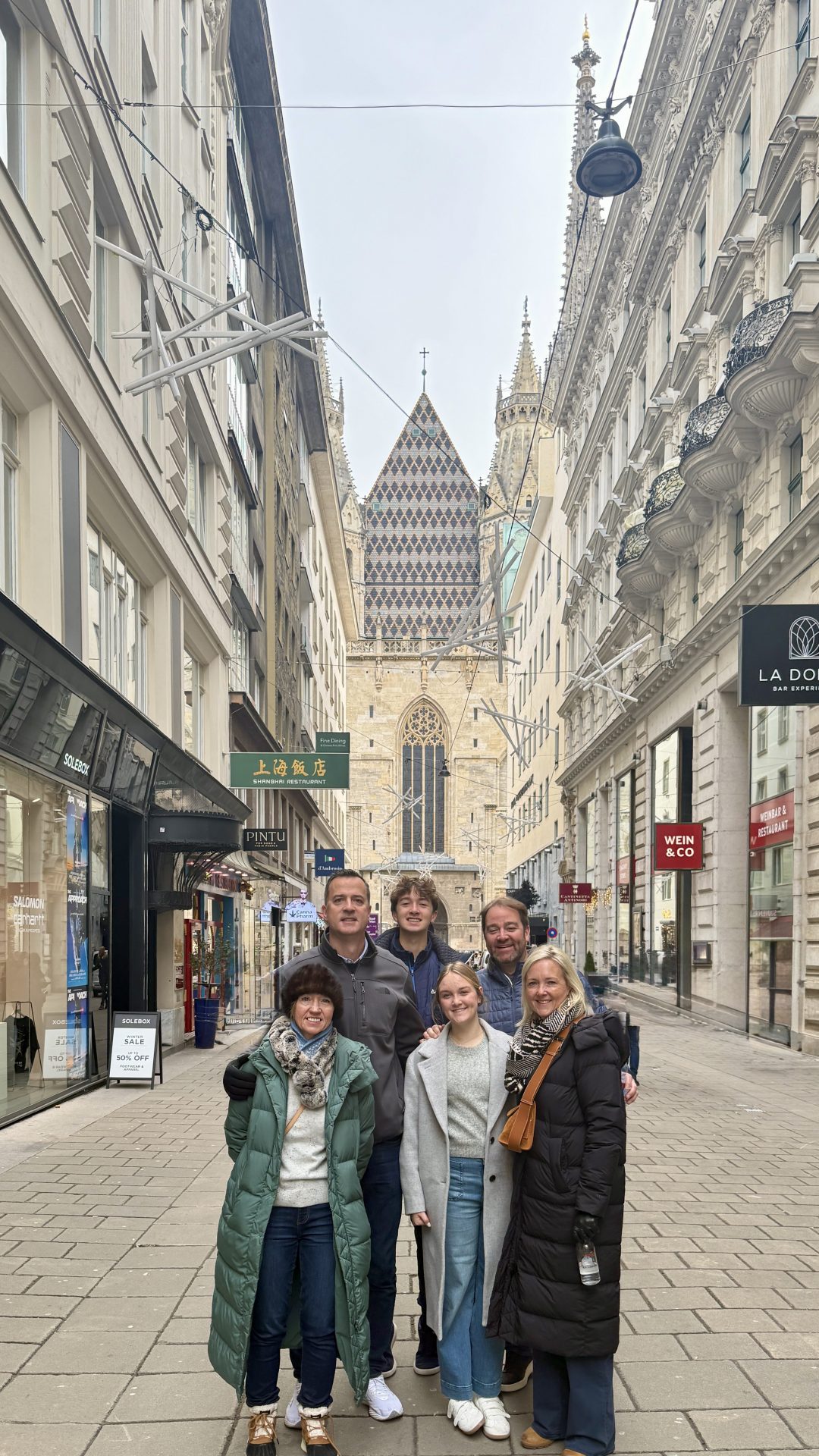
The Living Classroom: How We Turn Austrian History into a Multi-Generational Adventure
Austria holds a peculiar magic for those who seek to understand how the threads of Western civilization weave together. Unlike textbook learning that compartmentalizes history into isolated chapters, the Austrian landscape tells an unbroken story—one where Greek philosophers, Roman engineers, medieval knights, Habsburg emperors, and twentieth-century survivors all occupy the same cobblestoned streets and baroque palaces. For families crossing the Atlantic in search of an immersive Austrian history education, this small Alpine nation offers something extraordinary: a living history curriculum that speaks simultaneously to the eight-year-old fascinated by princesses and the grandmother who remembers her own history lessons about European conflict.
The challenge, of course, lies in making these connections visible and meaningful. Family educational travel in Austria requires a delicate balance to transform a palace garden into a philosophy seminar for children while keeping grandparents intellectually engaged. How can the weight of twentieth-century trauma be conveyed with sensitivity appropriate for young minds yet depth adequate for adult reflection? These questions form the foundation of thoughtfully designed interactive heritage tours that honor both the complexity of history and the diverse learning needs within familial groups.
Come and experience travel!
Personally designed, seamlessly delivered – your journey, our expertise!
We are a boutique travel agency and consultancy specializing in Hub & Spoke Tours across Central Europe, the Benelux and the Dolomites.
The Habsburg Laboratory: A Model for Interactive Heritage Tours
Maria Theresa, the only female ruler of the Habsburg dominions, understood something about education that modern pedagogues are only now rediscovering: learning happens best when it uses hands-on pedagogy within meaningful contexts. When she commissioned the redesign of Schönbrunn Palace gardens in the eighteenth century, she wasn’t simply creating a beautiful outdoor space. She was constructing an elaborate teaching tool for her sixteen children—a botanical, artistic, and philosophical curriculum carved in stone and planted in soil.
Walking through Schönbrunn today with this pedagogical lens transforms the Experience into a vital part of homeschooling in Vienna. The Neptune Fountain at the garden’s base becomes more than an impressive water feature; it serves as an entry point into Greek mythology, the god of seas representing not just ancient stories but the maritime ambitions that shaped European trade and power. Children can trace the progression from Greek myth to Roman engineering by observing how the fountain’s architecture employs Roman techniques to bring classical imagery to life—a concrete demonstration of the Western civilization context regarding how societies build upon one another.
The Roman Ruin, a theatrical folly constructed deliberately to appear as an ancient remnant, offers a sophisticated lesson in historic preservation concepts and how eighteenth-century Europeans understood their relationship to classical antiquity. For younger learners, this becomes a treasure hunt: spotting architectural elements borrowed from Rome, identifying mythological figures, and asking why someone would build something to look old on purpose. For grandparents familiar with the classical curriculum of their own schooling, this historical exploration for families reconnects them with foundational knowledge while offering new interpretive frameworks.
Egyptian Mysteries and Global Schooling Connections
Perhaps most surprisingly, Schönbrunn’s gardens contain distinct Egyptian influences that open conversations about archaeology, Napoleon’s campaigns, and the European fascination with ancient civilizations. The presence of Egyptian motifs in an Austrian imperial garden invites questions about cultural immersion, appropriation, and the ways powerful nations have always looked to ancient empires for legitimacy.
Come and experience travel!
We design bespoke travel experiences with a perfect balance of cultural depth, efficiency and comfort.
Specializing in seamless hub-and-spoke journeys, we create well-paced, immersive itineraries tailored to your interests.
This Egyptian thread connects naturally to the broader story of Vienna’s position as a crossroads of cultures. The city’s museums house remarkable Egyptian collections, including artifacts that traveled from the Nile Valley to the Danube through centuries of diplomatic gifts, archaeological expeditions, and imperial acquisition. For those pursuing global schooling, these collections provide tangible connections to curriculum materials studied at kitchen tables thousands of miles away.
The dimension of intergenerational bonding emerges when grandparents share their memories of how Egypt was presented in their own education—often through a colonial lens now being thoughtfully reexamined. These conversations, facilitated within the contemplative spaces of Vienna’s museums and gardens, create opportunities for families to discuss how historical understanding evolves across generations.
The Habsburg Legacy: Dynastic History for All Ages
Understanding the Habsburg legacy requires moving beyond the caricature of decadent royalty toward appreciating how one family shaped six centuries of European development. This dynasty produced philosophers and fools, reformers and reactionaries, patrons of genius and persecutors of innovators. Their story contains multitudes, making dynastic history for all ages both accessible and fascinating.
For children, the Habsburgs offer accessible entry points: stories of young archduchesses learning statecraft alongside embroidery, tales of royal children who kept exotic animals from distant lands, accounts of elaborate birthday celebrations and holiday traditions. The Sisi Museum, dedicated to Empress Elisabeth, captures imaginations across age groups—younger visitors drawn to her legendary beauty and rebellious spirit, older family members appreciating the complex psychological portrait that emerges from her letters and possessions.
Come and experience travel!
Our expertise lies in uncovering authentic stories, hidden corners, and behind-the-scenes experiences that bring destinations to life.
We design customized mindful travel experiences that seamlessly integrate mindful eating and mindful indulgence. These experiences foster self-care and create transformational journeys that nurture mental well-being, promote sustainable travel, and strengthen family connections.
The Hofburg Palace complex allows families to trace Habsburg rule from medieval fortress to baroque imperial residence. Walking these spaces, the abstract concept of “dynasty” becomes tangible. Younger children grasp how generations of one family lived and died within these walls; teenagers begin asking questions about hereditary power and its alternatives; grandparents draw connections to American revolutionary ideals and the deliberate rejection of monarchy. This is educational sightseeing at its most potent—where the location itself teaches the lesson.
Sacred Spaces and European History Field Trips
Vienna’s religious architecture offers profound educational opportunities, turning visits into European history field trips regardless of a family’s own faith traditions. St. Stephen’s Cathedral, with its Gothic spire visible from nearly everywhere in the central city, has witnessed every major event in Viennese history since the twelfth century. The catacombs beneath contain the remains of plague victims and Habsburg organs—yes, the family stored their internal organs separately from their bodies, a practice that opens conversations about medieval beliefs regarding resurrection and royal lineage.
For younger children, cathedral visits become scavenger hunts for symbolic imagery: finding the lamb, the lion, the various saints with their identifying attributes. These exercises develop visual literacy while introducing Christian iconography that appears throughout Western art. Older family members appreciate the architectural innovations visible in St. Stephen’s structure, where Romanesque foundations support Gothic heights in a literal demonstration of how building traditions evolved.
The transition to discussing Jewish history and the Holocaust requires careful calibration for different ages within family groups. Vienna’s Jewish heritage predates many American cities by centuries, with communities contributing disproportionately to the arts, sciences, and intellectual life that made the city a world capital of culture. The destruction of this community represents one of humanity’s darkest chapters—one that young learners can begin to comprehend through age-appropriate narratives while adults engage with more complex historical and moral questions.
Confronting Difficult History in a Living Classroom
The twentieth century left scars on Vienna that remain visible to those who know where to look. The city that produced Freud, Mahler, and Klimt also witnessed the enthusiastic embrace of Nazism by significant portions of its population. Addressing this history honestly, while remaining appropriate for young learners, represents one of the most important challenges in designing cross-generational learning experiences.
For children under twelve, this history might be introduced through stories of courage—the diplomats who risked careers to save lives, the ordinary citizens who hid neighbors, the artists who documented truth even when forbidden. These narratives of moral heroism provide age-appropriate entry points while laying groundwork for deeper understanding as children mature.
Teenagers benefit from visiting locations like the Judenplatz Holocaust Memorial, Rachel Whiteread’s haunting sculpture of library books turned inside out, representing the destroyed intellectual heritage of Vienna’s murdered Jewish population. The memorial’s location—above the remains of a medieval synagogue itself destroyed in an earlier persecution—demonstrates that the Holocaust, while unprecedented in scale, emerged from centuries of prejudice.
Grandparents traveling with their families often carry personal connections to this history. Whether through military service, refugee relatives, or simply the newsreel footage seared into their memories, older travelers bring emotional knowledge that enriches family understanding when shared in appropriate moments.
The Art of Pacing: Structuring a Vienna Travel Itinerary
Successfully engaging multiple generations requires careful attention to rhythm and variety. The eight-year-old who was fascinated by fountain sculptures for thirty minutes needs movement and novelty; the grandmother who could spend hours contemplating a Klimt painting needs permission to linger. Designing a balanced Vienna travel itinerary that honors both impulses without exhausting anyone demands expertise born from repeated observation of how families actually move through spaces.
Morning hours, when energy runs highest, prove ideal for more intellectually demanding sites and narratives. The lunch break becomes more than refueling—it’s processing time when families discuss the morning’s experiences over Wiener Schnitzel and apple strudel. Afternoon excursions can shift toward more sensory experiences: walking through forest paths where Habsburg emperors once hunted, visiting a traditional bakery where techniques haven’t changed in centuries, exploring a playground deliberately designed within a historic garden.
Bringing History Home
The ultimate measure of educational travel isn’t what families remember next week but how the experience continues informing understanding years later. When a homeschooled teenager encounters Napoleon in their curriculum three years after standing in the rooms he occupied, when a grandmother recognizes Habsburg influence while reading about European union politics, when a young adult chooses a college major in history or art—these delayed fruits demonstrate the transformative potential of experiential history learning.
Austrian history offers American homeschooling families something their remarkable country cannot: the deep time of European civilization made tangible. Walking where Romans walked, where medieval merchants traded, where emperors ruled and revolutionaries resisted, where humanity demonstrated both its highest cultural achievements and its capacity for systematic evil—these experiences create intellectual and emotional frameworks that classroom learning alone cannot replicate.
The invitation stands open: bring your family’s questions, your curriculum gaps, your generational wisdom, and your youthful curiosity to the living classroom where we turn Austrian history into a multi-generational adventure.
The Living Classroom: How We Turn Austrian History into a Multi-Generational Adventure
- House of Austrian History (hdgö)
- The World of the Habsburgs (Habsburger.net)
- Wien Museum
- Austrian Commission for UNESCO: World Heritage
- Mauthausen Memorial Education
- Kunsthistorisches Museum Vienna: Art Education
- Austrian National Library: State Hall and Collections
- Jewish Museum Vienna: Communication and Education
- Technisches Museum Wien (TMW)
- OeAD (Agency for Education and Internationalisation)