

Experience Travel Insights
Vienna’s Secret Opera Pantheon: The Schwind Foyer
What if Vienna’s deepest operatic secrets aren’t on stage, but hidden in plain sight? Our article unveils the Schwind Foyer at the State Opera – a ‘secret hall of fame.’ It’s a visual symphony connecting Mozart to Mahler, revealing untold stories of opera history and visionary leaders. Deepen your appreciation for Vienna’s unparalleled musical legacy beyond the performance.
by Long Lin-Maurer • December 4, 2025
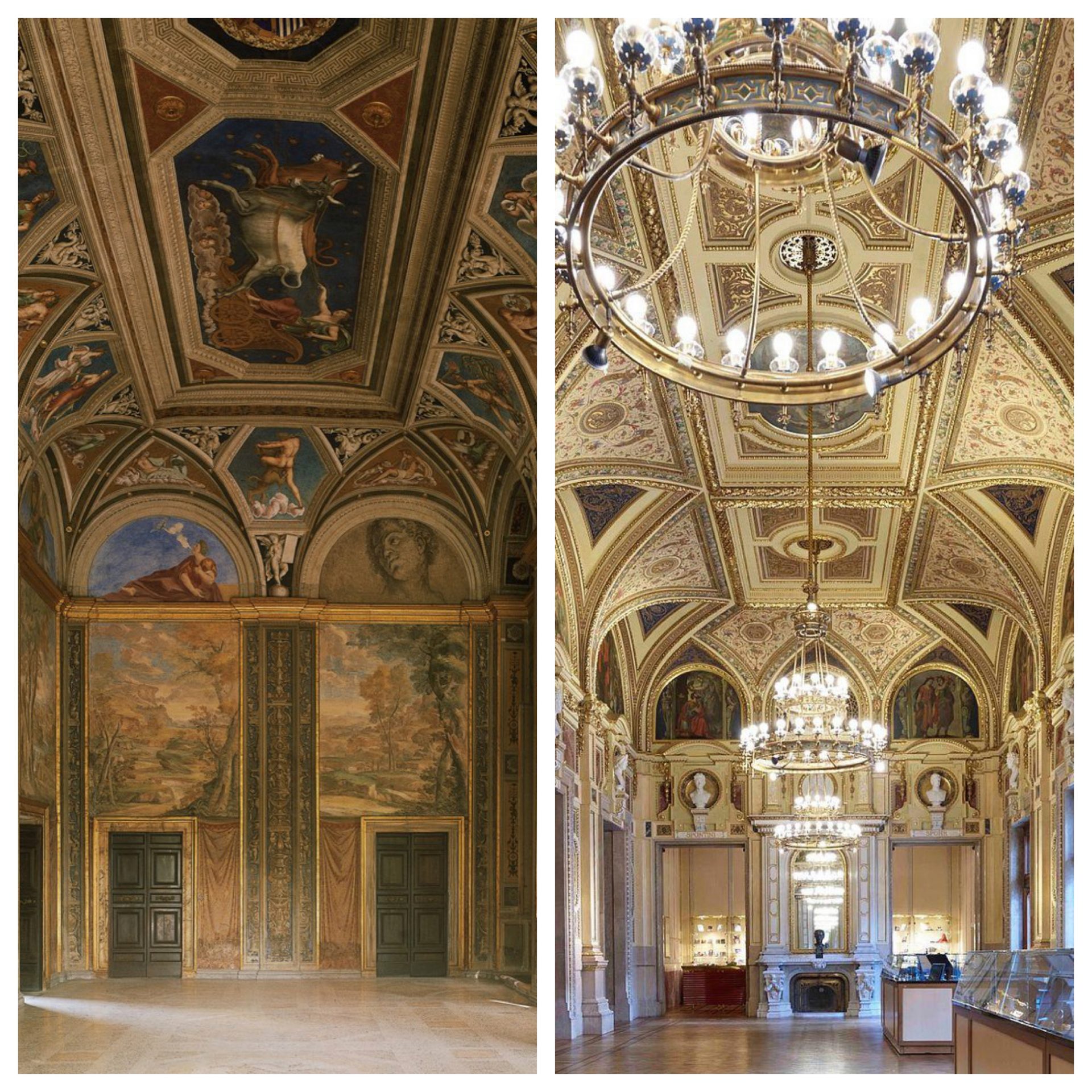
Vienna’s Secret Hall of Fame: The Schwind Foyer and Its Rich Opera History
Vienna, a name that resonates with profound significance for classical music aficionados worldwide, is more than a city; it is a pilgrimage site. For enthusiasts of classical music, Vienna offers an unparalleled journey into the soul of Western music. Its concert halls and opera houses are not merely architectural marvels but hallowed grounds where the works of legendary composers have been, and continue to be, brought to life. Beyond the celebrated performances and gilded auditoriums lie countless stories, whispered within the magnificent walls of its cultural institutions. These are narratives waiting to be discovered by those on a Vienna cultural travel adventure, seeking a deeper connection to the art form.
One of the most captivating of these stories unfolds within the Vienna State Opera, a beacon of the operatic world. Tucked away from the grandeur of the main stage is a space that serves as a bridge between the past and present: the Schwind Foyer. This splendid Vienna Opera intermission room is far more than a place for refreshment; it is a hall of fame, a time capsule reflecting the operatic canon of the 19th century, and a silent monument to the geniuses who paved the way for opera as we know it today. For the true connoisseur, a visit here is not a mere footnote to an evening’s performance but an intellectually and emotionally enriching experience that illuminates Vienna’s deep opera history. It is a space that ignites curiosity, inviting one to explore the hidden narratives behind the great names and to understand the intricate web of connections that solidified Vienna’s status as the undisputed capital of music.
A Symphony in Gold and Canvas: The Vision of Moritz von Schwind
The Schwind Foyer derives its name from the celebrated Late Romantic painter Moritz von Schwind, a figure who could be considered one of the first true interior designers of his era. Yet, Schwind was not only a master of the visual arts; he was a passionate musician himself. As a skilled violinist, he was an active participant in the intimate musical gatherings of his dear friend, Franz Schubert—the legendary “Schubertiades.” This deep, personal connection to music imbued his artistic vision for the foyer with a rare authenticity and understanding. He did not simply decorate a room; he orchestrated a masterpiece, making the Schwind Foyer what could be called Schwind’s visual symphony hall.
Come and experience travel!
Personally designed, seamlessly delivered – your journey, our expertise!
We are a boutique travel agency and consultancy specializing in Hub & Spoke Tours across Central Europe, the Benelux and the Dolomites.
Designed in an opulent style characteristic of Neo-Renaissance architecture, the hall is a feast for the eyes. Adorned with 22-karat gold leaf that glimmers under the soft light, the space exudes an aura of timeless elegance. Schwind’s genius is most evident in the lunettes, the arched spaces above the composer busts, where he created a series of masterful oil paintings. These are not mere portraits but vibrant narrative scenes drawn from the most significant works of the composers honored below. The selection of these particular operas offers a fascinating insight into the repertoire and artistic tastes that defined the cultural landscape at the time of the opera house’s grand opening in 1869.
The Pantheon of Composers: A Curated Legacy in the Schwind Foyer
The arrangement of the fourteen composer busts within the Schwind Foyer is a deliberate and telling curation. This Schwind Hall establishes a hierarchy of greatness, a pantheon of those who had passed away before the opera house opened its doors but whose legacies formed its spiritual foundation. At the center of the main wall, holding the place of highest honor, is the bust of Wolfgang Amadeus Mozart. He is the sun around which the other luminaries orbit. The lunette above him masterfully captures the essence of his genius, depicting scenes from three of his most iconic operas: “The Marriage of Figaro,” “The Magic Flute,” and “Don Giovanni.” This placement solidifies Mozart’s indisputable role as the cornerstone of the Viennese operatic tradition.
Flanking Mozart are the other two titans of Viennese Classicism, creating a holy trinity of musical innovation. To his right stand Joseph Haydn, celebrated with a scene from his monumental oratorio “The Creation,” and Ludwig van Beethoven, immortalized through his only opera, the powerful and heroic “Fidelio.” To Mozart’s left, the lineage is traced back to the great reformer of opera, Christoph Willibald Gluck, depicted with a scene from “Armide.” Beside Gluck is Franz Schubert, Schwind’s cherished friend, honored with a depiction of his Singspiel “Der häusliche Krieg” (The Domestic War), framed by visual representations of his immortal Lieder, “Erlkönig” (The Elf King) and “Der Fischer” (The Fisherman). This tribute by Moritz von Schwind is a poignant nod to their personal bond and his deep respect for Schubert’s vast, albeit then still underappreciated, contribution to musical drama.
A Journey Through the European Operatic Canon
Following the lunettes clockwise in the State Opera’s historic foyer is like taking a curated tour through the pan-European operatic canon of the mid-19th century. The selection reveals a rich tapestry of styles and national schools. We encounter Karl Ditters von Dittersdorf‘s charming “Doktor und Apotheker” (Doctor and Apothecary), a gem of the German Singspiel tradition. The grandeur of French Grand Opéra is represented by Giacomo Meyerbeer‘s epic “Les Huguenots” and Gaspare Spontini‘s neoclassical masterpiece “La vestale” (The Vestal Virgin). The German Romantic tradition is honored through Carl Maria von Weber‘s seminal work, “Der Freischütz” (The Marksman), and Heinrich Marschner‘s “Hans Heiling.”
Come and experience travel!
We design bespoke travel experiences with a perfect balance of cultural depth, efficiency and comfort.
Specializing in seamless hub-and-spoke journeys, we create well-paced, immersive itineraries tailored to your interests.
The Italian bel canto style, with its focus on vocal beauty and agility, is prominently featured with three of Gioachino Rossini‘s greatest hits: “Otello,” “Il barbiere di Siviglia” (The Barber of Seville), and “La Cenerentola” (Cinderella). The French Opéra comique is represented by François-Adrien Boieldieu’s enchanting “La dame blanche” (The White Lady) and “Le petit chaperon rouge” (Little Red Riding Hood). The inclusion of Luigi Cherubini’s “Les deux journées” (The Water Carrier) and Louis Spohr‘s “Jessonda” rounds out this comprehensive homage, showcasing the breadth and depth of the art form.
The opulent foyer at the Staatsoper also adds a touch of imperial gravitas, paying homage to the House of Habsburg’s contribution to the arts. Portraits of two music-loving rulers adorn the narrow walls: Emperor Leopold I, himself a notable composer, and Empress Maria Theresa, a gifted singer in her own right. Their presence underscores the deep historical connection between imperial patronage and Vienna’s flourishing musical life. Above it all, the ceiling painted by Friedrich Sturm, depicting “The Battle for the Wreath” and “The Victory,” serves as a triumphant allegory for artistic struggle and ultimate achievement.
A Continuum of Genius: The Directors’ Gallery and Opera History
While the lunettes and the primary busts honor the foundational composers, another series of sculptures, placed at eye level, brings the story of the Vienna State Opera into the modern era, creating a tangible link in its opera history. These are the busts of the institution’s most influential directors, men who shaped its artistic identity long after the building’s inauguration. This gallery creates a powerful sense of continuum, illustrating how visionary leadership built upon the legacy of the great masters.
Here, in what some call The Opera’s Schwind Gallery, one comes face to face with Gustav Mahler, the revolutionary conductor and composer who, as director, dragged the opera world into the 20th century. Supported by the progressive artists of the Vienna Secession, he championed the concept of the Gesamtkunstwerk (total work of art), where music, drama, and design were unified into a cohesive whole. He reformed the very experience of attending the opera by introducing dramatic pauses and, most controversially at the time, darkening the auditorium to focus the audience’s attention entirely on the stage. The original bust of Mahler was a creation of the legendary Auguste Rodin. Tragically, it was melted down during the Nazi regime due to Mahler’s Jewish heritage. The bust on display today is a copy, a poignant gift from his widow, Alma, ensuring his likeness endures in the house he so profoundly transformed.
Come and experience travel!
Our expertise lies in uncovering authentic stories, hidden corners, and behind-the-scenes experiences that bring destinations to life.
We design customized mindful travel experiences that seamlessly integrate mindful eating and mindful indulgence. These experiences foster self-care and create transformational journeys that nurture mental well-being, promote sustainable travel, and strengthen family connections.
Beside him in this Vienna State Opera’s composer gallery are other titans: Richard Strauss, the brilliant composer who, as director during the difficult post-World War I years, fought to secure the financial well-being of the orchestra musicians. We see Clemens Krauss, the visionary who inaugurated the beloved tradition of the Vienna New Year’s Concert. Karl Böhm, who served two terms as director and was a fierce advocate for rebuilding the State Opera in its original historic style after the devastation of World War II. And Herbert von Karajan, the sound engineering pioneer and arguably the most recorded conductor in history, who championed performing operas in their original languages, a practice that is now standard worldwide. The presence of Lorin Maazel, a cosmopolitan and daring innovator, completes this lineup of extraordinary leaders.
An Invitation to Deeper Discovery at the Schwind Foyer
The Moritz von Schwind Foyer is more than just a beautifully decorated room; it is a profound statement about artistic lineage, cultural memory, and the enduring power of music. It tells a story not only of the composers who wrote the masterpieces but also of the visionary artists and leaders who brought them to life and ensured their preservation for future generations. For the classical music enthusiast, it offers a unique opportunity to stand in the quiet presence of greatness, to trace the threads of influence that connect Mozart to Mahler, and to gain a deeper appreciation for the complex ecosystem that has made classical music in Vienna so legendary.
To experience this space is to understand that the Vienna State Opera is not a museum, but a living, breathing institution built on centuries of genius and passion. It serves as an invitation to look beyond the performance on the stage and to delve into the rich history that infuses every note with meaning. Crafting a journey that balances cultural depth with seamless comfort allows the discerning traveler to fully immerse themselves in these intellectual and cultural essences. Through expert guidance and locally-rooted knowledge, one can unlock the authentic stories and hidden corners of Vienna, transforming a simple visit into a truly memorable exploration of our shared cultural heritage. The Schwind Foyer is a perfect starting point for such a journey—a silent overture to the grand opera of Vienna itself.
KHM-Museumsverband: An Overview of its Institutions
- KHM-Museumsverband – The official website of the KHM-Museumsverband, providing a central hub for information on all its associated museums. It details the research activities and the legal structure of this major Austrian cultural institution.
- Kunsthistorisches Museum Wien – Picture Gallery – Explore the vast collections of the main building on Vienna’s Ringstrasse, which houses masterpieces of Western art. The museum is home to major works by artists such as Raphael, Vermeer, Velázquez, Rubens, and Rembrandt, as well as the world’s largest Bruegel collection.
- Weltmuseum Wien – The official site of Austria’s museum of ethnography, located in the Neue Burg. It holds significant collections of non-European cultures, including ethnographic objects, historical photographs, and early travel accounts.
- Theatermuseum – Discover the history of Austrian and international stage art at the Theatermuseum, housed in the baroque Palais Lobkowitz. Its collections include stage models, costumes, props, and hundreds of thousands of photographs and graphics.
- Theseus Temple – Learn about this neoclassical temple in the Volksgarten, which is a branch of the Kunsthistorisches Museum. Originally built to house a single sculpture by Antonio Canova, it now serves as a venue for contemporary art exhibitions.
- Imperial Carriage Museum Vienna – The official website for the collection of imperial carriages at Schönbrunn Palace. The museum displays the extensive fleet of the Habsburg court, from gala coaches to everyday vehicles and children’s carriages.
- Ambras Castle Innsbruck – The official website of this Renaissance castle and museum in Tyrol, administered by the KHM-Museumsverband. It houses the remarkable Chamber of Art and Curiosities, armories, and the Habsburg Portrait Gallery.
- Kunsthistorisches Museum – Wikipedia – A comprehensive overview of the history, architecture, and collections of the main museum building. The article details its origins under Emperor Franz Joseph I and its development into one of the world’s leading art museums.
- Spanish Riding School – While a separate entity, the stables (Stallburg) are an integral part of the Hofburg Palace complex and historically connected to the imperial collections. The Stallburg is Vienna’s most significant Renaissance building and home to the famous Lipizzaner stallions.
- KHM Research Projects – A portal to the extensive scientific research conducted within the KHM-Museumsverband. It highlights the institution’s role as a major non-university research center for art history, archaeology, and other related disciplines.