

Experience Travel Inspiration
Taste Deeper: Why One Vineyard Is Better Than Ten
What if your 10-winery wine tour is actually ruining your trip?
Most American travelers race through Europe’s wine country, collecting tastings like stamps. But science shows your palate—and memory—can’t keep up. This article reveals why slowing down to one vineyard unlocks what speed never can: true understanding of terroir, lasting memories, and connections no bus tour delivers. Discover the “lookout hopping” method that transforms how you’ll taste wine forever.
by Long Lin-Maurer • January 10, 2026
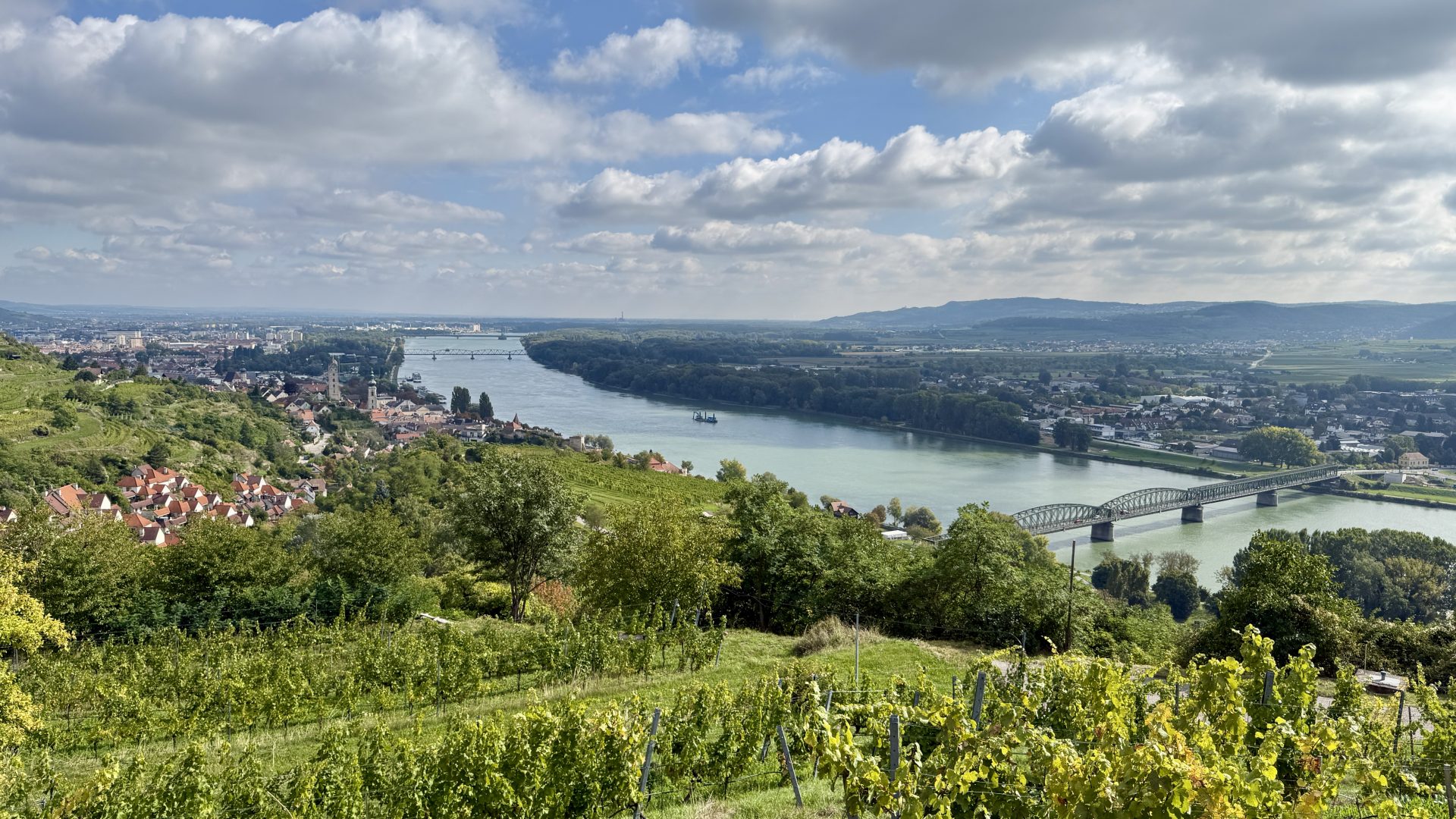
Why One Single Vineyard is Better Than Ten: The Philosophy of the Deep-Dive Tasting
The Myth of More in Quality Over Quantity Wine Travel
Across the rolling hills of Austria’s wine country, a peculiar phenomenon plays out each season. Buses filled with eager visitors snake through the landscape, stopping at vineyard after vineyard, cellar after cellar. Glasses are raised, sipped, and set down. Photos are taken. Then it’s back on the bus to the next stop. By the end of the day, these travelers have visited eight, ten, perhaps twelve wineries. They’ve tasted countless varietals. Yet something essential has slipped through their fingers like morning mist over the Danube.
This “more is better” approach has become the default setting for travelers, particularly those arriving from North America, where the sheer vastness of the landscape has cultivated a culture of covering ground. But wine, unlike miles driven or attractions checked off a list, doesn’t reveal its secrets through speed. It whispers them slowly, to those patient enough to listen.
Come and experience travel!
Personally designed, seamlessly delivered – your journey, our expertise!
We are a boutique travel agency and consultancy specializing in Hub & Spoke Tours across Central Europe, the Benelux and the Dolomites.
The deep-dive tasting philosophy offers a revolutionary alternative and a more exclusive vineyard experience: one vineyard, one producer, one terroir—explored with the depth and attention it deserves. Whatever the itinerary lacks in mileage, it makes up for in understanding. This is the essence of quality over quantity wine travel; what sounds like less actually becomes infinitely more.
Understanding Terroir: The Soul of a Terroir-Focused Tasting
Before understanding why one single vineyard is better than ten, one must first grasp the concept of terroir. It is a French term that has no precise English equivalent because the English-speaking world never quite needed to articulate something so profound about place. However, for a truly terroir-focused tasting, comprehending this interaction is vital.
Terroir encompasses everything that makes a specific location unique: the soil composition diversity, the angle at which sunlight strikes the vines, the direction of prevailing winds, the proximity to water, the ambient humidity, the creatures that pollinate the flowers, and even the wild yeasts floating invisibly through the air. It is, in essence, the taste of a place translated through the medium of grapes.
Austrian winemakers have understood this concept for centuries. The country’s wine regions—from the sun-drenched slopes of the Wachau to the gentle hills of the Weinviertel—each possess distinct personalities. But even within a single-site wine immersion, the differences between adjacent plots can be astonishing. A vineyard facing southeast produces a fundamentally different wine than its neighbor facing southwest, even when both grow identical grape varieties.
Come and experience travel!
We design bespoke travel experiences with a perfect balance of cultural depth, efficiency and comfort.
Specializing in seamless hub-and-spoke journeys, we create well-paced, immersive itineraries tailored to your interests.
Generic wine tours, by their very nature, cannot convey this subtlety. Moving from winery to winery creates a blur of impressions rather than genuine understanding. The palate becomes overwhelmed, and the mind cannot process the nuance. What should be a curated vineyard visit becomes mere consumption.
Lookout Hopping: Understanding Vineyard Topography Before Tasting
The philosophy of the deep-dive tasting begins not in the cellar but in the landscape itself. Before any wine touches the lips, the eyes must drink in the terrain that created it. This is where the lookout hopping methodology transforms an in-depth wine tour into a multisensory education focused on vineyard topography.
Imagine standing at a carefully chosen vantage point, the entire vineyard spread below like a living map. A knowledgeable guide points to the physiological features that shape the wine’s character: the ancient seabed deposits that give the soil its limestone richness, the thermal currents rising from the river valley, and the forest edge that shelters the vines from harsh northern winds. This focused planting exploration allows visitors to connect the land to the liquid.
Moving to a second lookout, the perspective shifts. Now the slope’s gradient becomes visible—how the steepest sections drain water quickly, stressing the vines in ways that concentrate flavors in the grapes. The morning shadow line becomes apparent, explaining why certain rows ripen differently than others.
Come and experience travel!
Our expertise lies in uncovering authentic stories, hidden corners, and behind-the-scenes experiences that bring destinations to life.
We design customized mindful travel experiences that seamlessly integrate mindful eating and mindful indulgence. These experiences foster self-care and create transformational journeys that nurture mental well-being, promote sustainable travel, and strengthen family connections.
A third vantage point reveals the microclimate variations within what appeared to be a uniform vineyard. The depression where cold air pools on autumn nights. The rocky outcropping that radiates stored heat after sunset. The ancient walls that create wind shadows.
By the time the actual tasting begins, visitors possess a visual vocabulary for understanding what they’re about to taste. They have seen the terroir before tasting it—a crucial sequence that generic tours invert or ignore entirely.
One Producer, Multiple Expressions: Vertical Wine Flights and Horizontal Tasting Benefits
Working with a single vineyard and producer enables something impossible in the scatter-shot approach: the ability to isolate variables and truly taste differences. This is where specialized wine education transforms from abstract concept to lived experience, primarily through the power of comparison.
Consider the horizontal tasting benefits within a single vineyard. The same producer, the same vintage year, but wines from different parcels within the property. One comes from the upper slopes where soil is thin and roots must dive deep for moisture. Another originates from the lower sections where clay holds water and nutrients. A third emerges from the middle zone where limestone dominates.
Tasted side by side, with the knowledge of their origins fresh in mind from the lookout hopping experience, the differences become not just detectable but obvious. The high-slope wine shows tension and minerality. The lower slope wine offers generosity and fruit. The limestone parcel contributes structure and aging potential. Same grape variety, same winemaker philosophy, same brand—yet three distinctly different expressions.
A vertical wine flight adds another dimension: time. The same parcel across multiple vintages reveals how weather patterns shape each year’s character. The warm vintage that pushed ripeness. The cool year that preserved acidity. The drought that concentrated everything. The wet spring that required vigilant canopy management.
This depth of experience simply cannot exist when rushing between multiple producers. Each winery would offer only a glimpse, a snapshot lacking context, whereas an intensive winery deep-dive offers a full cinematic narrative.
The Science of Sensory Analysis and Memory
Cognitive research supports what experienced tasters have long known intuitively: the human palate has limits, and memory formation requires time. When exposed to too many stimuli in rapid succession, the brain struggles to form distinct memories. Everything blurs together, making accurate sensory analysis nearly impossible.
Wine professionals conducting serious evaluations rarely taste more than a dozen wines in a session, and they take extensive notes to compensate for memory’s limitations. Yet casual wine tourists regularly attempt to process three or four times that number, without notes, while also navigating unfamiliar environments.
The deep-dive approach respects human cognitive architecture. Fewer wines, more time with each, context that creates memory hooks, and sensory experiences beyond taste alone. The result is not just temporary pleasure but lasting knowledge. Months later, years later, those wines can be recalled with clarity. The taste triggers memories of the landscape, the light, the conversation, and the moment of understanding why one single vineyard is better than ten.
Mindful Indulgence: The Art of Slow Wine Tourism
There exists a quality of attention that transforms ordinary experiences into extraordinary ones. Mindfulness practices across cultures have recognized this truth: how we engage matters as much as what we engage with. This is the heart of slow wine tourism—a deliberate pacing that favors presence over volume.
Applied to wine tasting, this principle suggests that full presence with a single glass yields more than distracted sampling of many. The philosophy of the deep-dive tasting creates conditions for this quality of attention. Without the pressure to move to the next stop, without the anxiety of missing something, visitors can settle into the experience.
The color of the wine becomes worth contemplating. The way it moves in the glass reveals its body and viscosity. The first aroma differs from what emerges after minutes of air exposure. The attack on the palate evolves through mid-palate to finish. Sustainable wine travel isn’t just about environmental impact; it represents a sustainable pace for the human senses.
This is not pretension—it is the difference between gulping and savoring, between fueling and nourishing, between tourism and travel.
The Austrian Context: Where Austrian Wine Culture Meets Depth
Austria provides an ideal setting for this philosophy because Austrian wine culture has always valued quality over quantity. The country’s vineyards are small by global standards. Production emphasizes precision over volume. Winemakers often know every vine personally.
The classification systems reflect this attention to place. The DAC (Districtus Austriae Controllatus) designations protect regional identity. The terroir-focused approach of organizations like the Österreichische Traditionsweingüter mirrors Burgundy’s obsession with specific vineyard sites. This creates an environment of winery exclusivity not in terms of snobbery, but in terms of specific, site-driven focus.
This cultural context means that Austrian producers welcome deep engagement. They have stories to tell about their land, their families, their traditions. They appreciate visitors who want to understand rather than simply consume. The relationship that forms during this immersive experience differs fundamentally from the transactional exchanges of high-volume tourism.
From Tasting to Lasting: Creating Transformational Wine Experiences
The ultimate argument for why one single vineyard is better than ten is not about wine at all. It is about what travel can be at its best: transformational rather than transactional, connecting rather than collecting, depth rather than breadth.
A single vineyard, explored with care and expertise, becomes a teacher. It offers lessons about geology and climate, about tradition and innovation, about patience and attention. These lessons extend beyond wine into life itself.
The travelers who embrace this approach return home changed in subtle ways. They taste wine differently, yes, but they also see landscapes differently. They understand that surfaces conceal depths. They have learned, in their bodies and not just their minds, that slowing down reveals more than speeding up.
In a world that increasingly mistakes activity for accomplishment, the philosophy of the deep-dive tasting offers a quiet revolution. One vineyard. One producer. One terroir. Infinite discovery.
Why One Single Vineyard is Better Than Ten: The Philosophy of the Deep-Dive Tasting
- The Concept of the Ried (Single Vineyard) in Austrian Wine Law
- The Philosophy of the ÖTW Classification (Austrian Traditionsweingüter)
- History of Viticulture in the City of Vienna
- Viennese Heurigen Culture (UNESCO Intangible Cultural Heritage)
- Geology of Austrian Vineyards: A Scientific Perspective
- Wiener Gemischter Satz DAC: The Single Vineyard Field Blend
- Wien Kulturgut: Digital Cultural Heritage Maps
- The Imperial Heritage of Austrian Agriculture
- Code of Ethics: Vinea Wachau Nobilis Districtus
- Scientific Study on Terroir and zoning (Interreg Central Europe)