

Experience Travel Inspiration
The Woman in Gold: The Muse, the Masterpiece, and the Stolen Legacy
What if the most famous painting you’ll see in New York wasn’t always called by its true name?
The “Woman in Gold” has a hidden history that transforms a museum visit into a detective story. Discover why the Nazis erased her identity, what her glittering portrait reveals about Vienna’s lost golden age, and how one woman’s fight brought her home to America. This is the story behind the masterpiece.
by Long Lin-Maurer • January 1, 2026
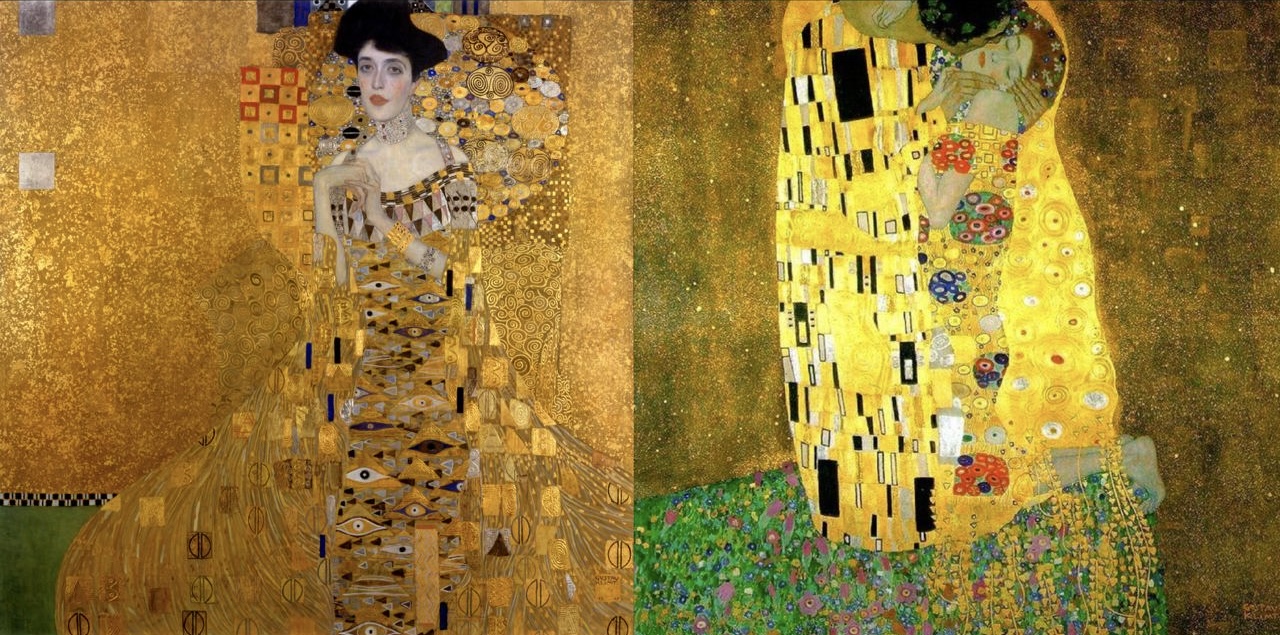
Woman in Gold: The Captivating Story Behind the Portrait of Adele Bloch-Bauer I
Fin-de-siècle Vienna at the turn of the twentieth century was a city on fire with creativity. In the grand coffeehouses and glittering salons of the Habsburg capital, artists, writers, intellectuals, and musicians gathered to debate, dream, and revolutionize their respective fields. It was an era of unprecedented cultural flourishing, a golden age that would produce some of the most significant artistic achievements in Western history. At the center of this creative explosion stood Gustav Klimt, a painter whose shimmering, sensual works would come to define an entire epoch. Among his most celebrated creations is a Golden Style masterpiece that has transcended art history to become a symbol of beauty, tragedy, and justice. This is the fascinating story of the Woman in Gold.
Gustav Klimt: The Revolutionary Artist of the Golden Phase
Gustav Klimt was born in 1862 in Baumgarten, then a suburb of Vienna, to a gold engraver father and a mother with unfulfilled musical ambitions. This humble beginning would prove profoundly influential—his father’s craft with precious metals would later manifest in the decorative gold leaf technique that became Klimt’s signature medium. The young Gustav showed extraordinary artistic talent early, earning a scholarship to the Vienna School of Arts and Crafts at just fourteen years old.
Come and experience travel!
Personally designed, seamlessly delivered – your journey, our expertise!
We are a boutique travel agency and consultancy specializing in Hub & Spoke Tours across Central Europe, the Benelux and the Dolomites.
Initially, Klimt worked in a conventional academic style, collaborating with his brother and fellow artist Franz Matsch on commissions throughout the Austro-Hungarian Empire. However, the rigid constraints of academic painting felt increasingly suffocating to an artist who sensed that Viennese Art Nouveau (Jugendstil) could be something more—something deeply personal and transformative.
The death of his brother and father in 1892 pushed Klimt toward a more introspective approach. By 1897, he had co-founded the Vienna Secession, a movement of artists determined to break free from the conservative establishment. Their motto, “To every age its art, to art its freedom,” signaled a new era.
What emerged was revolutionary. Klimt developed a style that blended Byzantine influence, Japanese prints, and Egyptian motifs. His paintings of women in gold settings pulsated with an erotic intensity that scandalized society while captivating it. The female form, adorned in elaborate patterns and rendered with religious devotion, became his obsessive subject, culminating in his most famous work, the Lady in Gold.
The Luminous Salons of Jewish Vienna
To understand the Portrait of Adele Bloch-Bauer I, one must understand the world that nurtured it. Turn-of-the-century Vienna was home to a thriving Jewish community that had experienced dramatic emancipation. Freed from restrictions, Jewish families rose to prominence in finance, industry, and the arts, becoming the primary patrons of the Vienna Secession artists.
Come and experience travel!
We design bespoke travel experiences with a perfect balance of cultural depth, efficiency and comfort.
Specializing in seamless hub-and-spoke journeys, we create well-paced, immersive itineraries tailored to your interests.
These families cultivated culture with passionate dedication. Their salons became the intellectual nerve centers of the city. Here, the boundaries of Habsburg society relaxed, and ideas flowed freely. It was in this milieu that Gustav Klimt found his patrons and muses. The wealthy industrialists who commissioned his work were often married to women of exceptional refinement—women who appreciated art as a vital expression of human experience. These collaborations resulted in some of the most iconic images of women in gold and vibrant color that the world has ever seen.
Adele Bloch-Bauer: The Muse Behind the Golden Adele
Among all the women who moved through Klimt’s orbit, none is as lastingly associated with his legacy as Adele Bloch-Bauer. Born Adele Bauer in 1881, she exhibited an intellectual intensity from early youth. While many young women of her class were groomed for marriage, Adele engaged seriously with the philosophical and artistic currents of her time, eventually becoming the subject of the Golden Adele.
At eighteen, she married Ferdinand Bloch-Bauer, a sugar industrialist seventeen years her senior. Following a common practice, they combined their surnames, settled in Vienna’s eighth district, and Adele transformed their home into a sought-after salon. Contemporaries described her as delicate but possessed of a fierce intelligence. Her salon attracted luminaries like Gustav Mahler and Stefan Zweig, and naturally, Gustav Klimt.
The precise nature of their relationship remains a subject of speculation. What is certain is that Klimt was captivated by her. She is the only woman Klimt painted twice in full-length portraits, and her likeness in the Woman in Gold remains his most defining portrayal of the complex modern woman.
Come and experience travel!
Our expertise lies in uncovering authentic stories, hidden corners, and behind-the-scenes experiences that bring destinations to life.
We design customized mindful travel experiences that seamlessly integrate mindful eating and mindful indulgence. These experiences foster self-care and create transformational journeys that nurture mental well-being, promote sustainable travel, and strengthen family connections.
A Husband’s Commission for the Austrian Mona Lisa
Ferdinand Bloch-Bauer was a man of immense wealth who admired Klimt’s work tremendously. Around 1903, he commissioned the artist to paint the Portrait of Adele Bloch-Bauer I.
What followed was one of the most intensive portrait commissions in art history. Klimt spent four years working on the piece, producing over one hundred preparatory sketches. He experimented with compositions and the revolutionary application of gold leaf and silver into the oil painting. This technique was directly inspired by the Byzantine mosaics Klimt had studied in Ravenna, Italy.
When Klimt finally completed the portrait in 1907, he had created an icon. Adele emerges from a field of shimmering gold, her pale face and elegant hands the only naturalistic elements in a composition dominated by geometric patterns. She wears an elaborate choker, and her dress dissolves into abstract ornamentation. Often referred to as the Austrian Mona Lisa, the painting was immediately recognized as a defining achievement of Klimt’s celebrated “Golden Phase.” It hung in the Bloch-Bauer apartment, a glittering testament to the alchemy between artist and subject.
The Legacy of the Women in Gold
Klimt painted Adele again in 1912, in a style that dispensed with the Byzantine gold for vibrant colors, yet the 1907 Woman in Gold remains the definitive image. Adele Bloch-Bauer died in 1925 at just forty-three. In her will, she expressed a wish that the Klimt paintings be donated to the Austrian State Gallery (Belvedere), a request that would later fuel decades of legal battles.
The story of the Women in Gold—a phrase now often associated with the film and book detailing the painting’s history—does not end with the death of its subject. It continues through the dark era of Nazi art theft, where the portrait was seized, and the identity of the Jewish subject was erased, with the painting retitled simply The Lady in Gold to hide its origins.
The eventual art restitution of the painting to Adele’s niece, Maria Altmann, in the early 2000s completed the journey. Today, the painting hangs in the Neue Galerie in New York, far from Vienna, yet it remains the ultimate symbol of fin-de-siècle Vienna. It stands as a monument to a vanished world, a woman transformed into an icon, and the artist who immortalized her in gold.
Resources on the History, Restitution, and Artistic Significance of “The Woman in Gold”
- Neue Galerie New York: Portrait of Adele Bloch-Bauer I
Access the official collection record from the current home of the painting, featuring detailed provenance, exhibition history, and artistic commentary. - Lexicon of Austrian Provenance Research: Ferdinand Bloch-Bauer
A definitive scientific database entry detailing the specific assets, seizure history, and provenance of the diverse Bloch-Bauer collection under the Nazi regime. - Legal Information Institute: Republic of Austria v. Altmann
The full text of the 2004 U.S. Supreme Court opinion which allowed Maria Altmann to sue the Austrian government for the return of the paintings. - Smarthistory: Klimt’s Portrait of Adele Bloch-Bauer I
An academic art history perspective analyzing the Byzantine influences, symbolism, and the cultural context of Vienna 1900 surrounding the work. - Arthemis: Maria Altmann and Austria Case Study
A case note from the Art-Law Centre at the University of Geneva detailing the arbitration process and the legal framework of the restitution. - Encyclopedia Britannica: Portrait of Adele Bloch-Bauer I
A comprehensive historical overview of the painting, the subject, and the timeline of its theft and eventual return to the family. - The Gustav Klimt Foundation
An independent research institution providing extensive context on Gustav Klimt’s life, his female patrons in Viennese society, and his artistic periods. - Jewish Virtual Library: Maria Altmann
A biographical resource focusing on the life of Maria Altmann, the niece of Adele Bloch-Bauer, and her legal battle for the recovery of her family’s heritage. - The New York Times: Klimt Paintings to Go to Heir (2006)
The contemporary report documenting the decisive moment the Austrian arbitration panel ruled in favor of returning the paintings to the Bloch-Bauer heirs. - Jewish Museum Vienna
The official site of the museum which provides essential cultural context regarding the role of Jewish patrons, including the Bloch-Bauers, in the cultural flourishing of Vienna circa 1900.