

Experience Travel Insights
The Art of Looking from the Outside In: How Neuromarketing and Deep Empathy Change the Way We Experience Austria.
What if your next trip to Austria could actually change you—not just your photo library?
Forget exhausting sightseeing marathons. This article reveals how neuroscience and deep cultural understanding are transforming travel into something genuinely restorative. Discover why Vienna’s architecture affects your brain in measurable ways, how the “familiar stranger” perspective unlocks hidden cultural layers, and why 2026’s savviest travelers are choosing transformation over tourism.
by Long Lin-Maurer • May 18, 2026
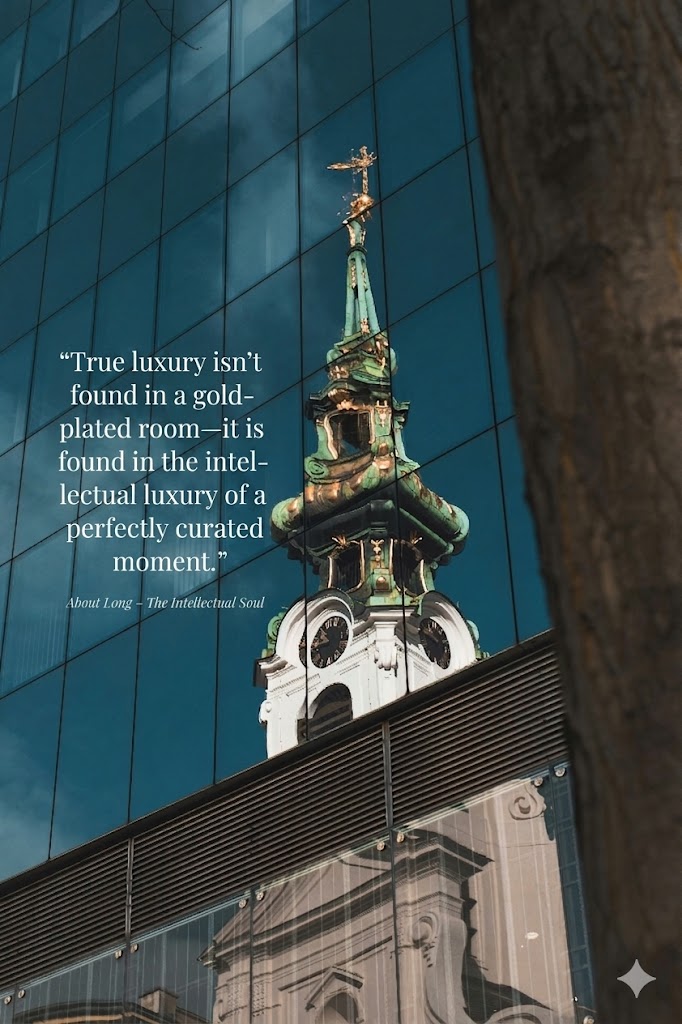
How Neuromarketing and Deep Empathy Change the Way We Experience Austria
The Evolution of Transformative Travel in Austria
The year 2026 marks a decisive turning point in how discerning travelers engage with destinations. The era of checking landmarks off a list, of superficial photo opportunities at famous sites, has given way to something far more profound. Today’s most sophisticated travelers—particularly those crossing the Atlantic to explore Central Europe—seek transformative travel experiences that fundamentally alter their inner landscape. This deep desire for an emotional connection to Austria means they arrive not merely to see the country, but to feel it, to understand it, and ultimately, to understand themselves through its lens.
This shift reflects a deeper hunger in contemporary society. After years of digital overwhelm, constant connectivity, and the relentless pace of modern life, travelers increasingly recognize that true luxury is not about thread counts in hotel sheets or the prestige of a Michelin-starred meal. True luxury is transformation. It is the rare gift of clarity that emerges when a journey reaches beyond the surface and touches something essential within us.
Come and experience travel!
Personally designed, seamlessly delivered – your journey, our expertise!
We are a boutique travel agency and consultancy specializing in Hub & Spoke Tours across Central Europe, the Benelux and the Dolomites.
Discovering Austria’s psychology requires peeling back its many layers. With its imperial history, complex cultural identity, and profound contributions to understanding the mind, the nation offers uniquely fertile ground for this kind of psychological journey. This is the birthplace of psychoanalysis, after all—a nation that has long understood that what lies beneath the surface matters most.
Brain-Based Travel Design: The Science of a Meaningful Austrian Journey
Neuro-tourism insights, drawn from the intersection of neuroscience and behavioral psychology, have revolutionized our understanding of how humans process experiences. The findings from this field on the psychological impact of travel are profound: our brains respond to environments in ways we rarely consciously recognize. Architecture, light, sound, spatial arrangement, and cultural symbolism all trigger complex neurological responses that shape our emotional states and the memories we form.
Consider entering the nave of St. Stephen’s Cathedral in Vienna. The soaring Gothic vaulted ceilings are not merely impressive—they physiologically affect visitors by drawing the gaze upward, expanding the sense of personal space, and triggering responses associated with awe and transcendence. The play of light through medieval stained glass activates color-processing regions of the brain that influence mood and emotional receptivity. The acoustic properties of the space, developed over centuries, create a sound environment that naturally quiets mental chatter.
This understanding of brain-based travel design transforms how cultural immersion can be curated. Rather than simply scheduling a cathedral visit between coffee house stops and museum tours, an informed approach considers the sequence of experiences, the emotional arc of a day, and the interplay between stimulation and rest, recognizing that conventional tourism often misses the chance for a truly deep sensory experience. It acknowledges that the human nervous system has needs that are routinely ignored.
The average American traveler returns from Europe exhausted rather than refreshed, overstimulated rather than enlightened. This is not because European culture is inherently draining—quite the opposite. It is because conventional tourism treats the human being as a passive receptacle for experiences rather than an active participant in a meaningful psychological journey.
Profound Cultural Insight: The Power of the Familiar Stranger
“Do not oppress the stranger. You know the heart of a stranger.”
Guiding Austria’s elite experiences with the heart of a local and the analytical edge of a familiar stranger.
There exists a unique perspective that emerges when someone inhabits the space between cultures. Those who have been shaped by multiple worlds—who carry within them the values and perceptual frameworks of different civilizations—possess an extraordinary gift. This unique position offers profound cultural insight that neither pure locals nor conventional tourists can access. They can look at Austrian culture with the emotional depth and intuitive understanding of an insider while simultaneously maintaining the razor-sharp, unbiased questioning of an outsider.
The native Viennese, steeped in their culture from birth, often cannot see the forest for the trees. The typical visitor, arriving with guidebook in hand, sees only surfaces and clichés. But the familiar stranger perceives patterns, recognizes what is culturally specific versus universally human, and can translate profound local wisdom into frameworks that resonate across cultural boundaries.
For American travelers especially, this perspective is invaluable for their Austrian journey experience. A familiar stranger serves as a bridge, facilitating a deeper level of cultural understanding and helping visitors grasp not only what they are seeing but why it matters and how it connects to their own lives and concerns.
This neutrality is not coldness—it is a form of clarity. It allows for an honest assessment of what Austrian culture offers and where its limitations lie. It prevents the romanticization that often characterizes European tourism while also avoiding the dismissiveness that comes from failing to appreciate genuine cultural achievements.
A Sanctuary for the Mind: Curating Cognitive Travel Experiences in Vienna
The modern traveler, particularly the accomplished professional crossing the Atlantic, carries an invisible burden. Years of high-stakes decision-making, constant digital interruption, and the cognitive load of contemporary life leave the nervous system in a state of chronic arousal. The prefrontal cortex—responsible for executive function, judgment, and strategic thinking—operates at a deficit. Creativity suffers. Perspective narrows. The very capacities that define success become compromised.
Mindful tourism, when properly designed, offers an antidote. A Vienna travel itinerary can be a powerful tool for this. The city, with its iconic Viennese coffee houses, celebration of contemplation, and tradition of meaningful conversation, provides a template for what we call “sanctuary experiences”—or truly restorative cognitive travel experiences.
This is not about spa treatments or digital detox retreats, though those have their place. It is about understanding that every environment either contributes to mental restoration or detracts from it. A properly sequenced day in Vienna might begin with an early morning visit to the Belvedere gardens, when the grounds are nearly empty and the nervous system can settle into the rhythm of formal garden design—geometry serving as a framework for mental ordering.
Mid-morning might bring engagement with Habsburg history at the Winter Riding School, where the precision and discipline of classical horsemanship demonstrates a particular relationship between tradition and excellence that resonates powerfully with high-achieving visitors. The afternoon could offer immersion in Vienna’s Jewish intellectual heritage—the cafes where Freud and his circle debated the unconscious, the neighborhoods that fostered modernity’s most significant ideas. Each element within these curated cognitive travel experiences serves the larger purpose: not entertainment, but transformation.
The Emotional Connection to Austrian Heritage Through Empathetic Travel
Deep empathy—the core of empathetic travel—allows for decoding the emotional landscape of a destination. This capacity to understand and share the feelings embedded in a culture is key to forging a true connection. Austria’s emotional landscape is uniquely complex, shaped by imperial grandeur and twentieth-century catastrophe, by the glories of Mozart and the horrors of Anschluss, by Catholic tradition and Enlightenment questioning.
For travelers on a psychological journey interested in Jewish heritage in Vienna, this complexity is especially significant. Austria was home to one of Europe’s most vibrant Jewish communities—a community that contributed disproportionately to Viennese culture, from psychoanalysis to music to literature to philosophy. The destruction of that community represents one of history’s great cultural catastrophes. Yet traces remain, and understanding those traces requires more than historical knowledge.
It requires emotional intelligence. It requires the ability to stand in a particular courtyard or walk a particular street and feel the weight of what happened there while also perceiving the life that existed before. This is where sensory travel planning comes into play, creating itineraries that honor loss without being paralyzing and finding meaning without sentimentality.
This is where the familiar stranger’s perspective proves essential. Neither mired in local defensiveness nor approaching with simplistic judgment, this perspective can hold complexity. It can acknowledge Austria’s failures while recognizing its contributions, creating space for travelers to connect with a heritage that was nearly erased while also appreciating the Austria that exists today.
The Future of the Psychological Journey: Luxury Travel Austria
The trends shaping luxury travel in Austria for 2026 and beyond point toward a continued demand for experiences that deliver genuine psychological value. Travelers increasingly recognize that the most precious commodity is not money but attention—and that how attention is directed during travel determines whether a journey merely consumes time or actually enriches life.
How we experience Austria is changing. When approached with neuro-tourism insights and deep empathy, it offers experiences unavailable elsewhere. The combination of imperial architecture, philosophical tradition, musical heritage, and complex history creates a destination uniquely suited to the thoughtful traveler seeking transformative travel rather than mere entertainment.
The key lies in curation—in understanding that every element of a journey either contributes to or detracts from the deeper purpose. This comprehensive approach, combining Austrian culture with behavioral science, is the promise of elite travel in 2026: not escapism, but encounter. Accommodation, transportation, and dining must work in concert with cultural encounters to support the traveler’s capacity to receive what the destination offers.
The sophisticated traveler knows that such transformation cannot be purchased from a catalog or assembled from reviews. It emerges only when expertise, empathy, and genuine cultural understanding combine to create journeys worthy of the precious time invested.
Austria awaits. The question is whether your Austrian journey experience will touch only the surface—or reach all the way to the soul.
How Neuromarketing and Deep Empathy Change the Way We Experience Austria
- Neuromarketing and Consumer Neuroscience: Current Understanding and Future DirectionsScientific overview of neuromarketing principles and their application in tourism and cultural experiences, including heritage destinations.
- Emotional Design in Tourism: Neuroarchitecture and Heritage SpacesResearch on how emotional responses to architectural heritage influence visitor experiences in European cultural sites.
- Neural Correlates of Aesthetic Experience in Cultural TourismNeuroscience study examining brain responses to cultural and artistic stimuli in museum and heritage contexts.
- Empathy and Cultural Heritage: Digital Engagement StrategiesAcademic analysis of how empathetic design transforms visitor engagement with historical narratives and cultural memory.
- Neurological Responses to Tourism Destination MarketingResearch exploring how brain imaging reveals tourist emotional engagement with destination branding and cultural narratives.
- Cognitive and Emotional Processing of Historical EnvironmentsScientific study on how visitors process and remember experiences in historical urban environments like Vienna’s historic center.
- Multisensory Marketing and Heritage Tourism ExperienceAcademic research on how multisensory stimuli enhance emotional connection and memory formation in cultural tourism settings.
- Measuring Emotional Engagement in Museum Visitors Using Biometric DataStudy utilizing physiological measurements to understand visitor emotional responses to cultural heritage exhibitions.
- Sustainable Tourism Through Emotional Intelligence and EmpathyResearch examining how empathetic approaches to cultural tourism create more meaningful and sustainable visitor experiences.
- Neural Mechanisms of Cultural Memory and Place AttachmentNeuroscientific investigation of how cultural experiences create lasting memories and emotional bonds with heritage destinations.