

Experience Travel Blog
The Lipizzaner: Vienna’s Four Legged Majestic Rolls-Royce
Did you know Vienna’s famous white horses are actually born dark?
This article reveals the centuries-old story behind the Lipizzaners — a living tradition most Americans have never fully understood. You’ll discover why General Patton risked everything to save them, how their care rivals elite human athletes, and what makes witnessing them in person an experience no video can replicate. This is the deeper Austria worth crossing the Atlantic for.
by Long Lin-Maurer • October 7, 2026
The White Horses of Vienna: A Living Legacy Four Centuries in the Making
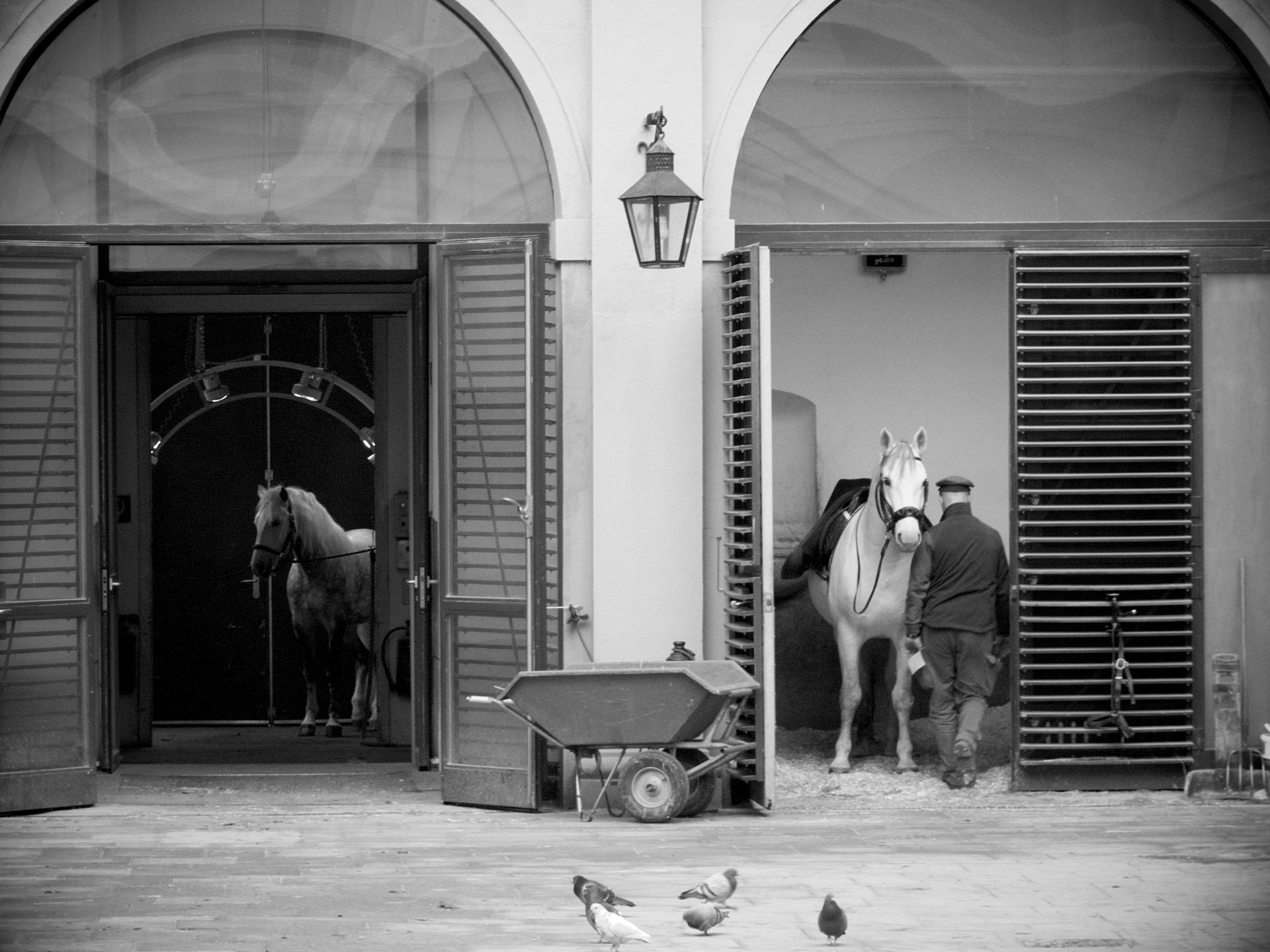
There is a moment in the baroque Winter Riding School of the Hofburg Palace when time folds in on itself. The chandeliers cast a warm glow across the white hall, the air carries a faint scent of leather and cedar shavings, and a stallion enters the arena with an unhurried, almost regal cadence. His coat gleams like polished marble. His rider, dressed in a brown tailcoat, bicorne hat, and white buckskin breeches unchanged since the days of the Habsburgs, gives an imperceptible signal. The horse responds with a movement so controlled, so gravity-defying, that the audience collectively holds its breath. This is the Lipizzaner — not merely a horse, but a living archive of European civilization, an equine athlete whose every step has been shaped by centuries of selective breeding, classical philosophy, and an almost obsessive devotion to care.
For travelers who cross the Atlantic seeking something that cannot be replicated, something that exists in only one place on Earth, these famous white horses represent one of Austria’s most extraordinary cultural treasures. Understanding them — their history, their biology, their remarkably pampered daily lives — transforms a visit to Vienna from sightseeing into genuine cultural immersion.
An Imperial Lineage: From Habsburg Stables to World Heritage
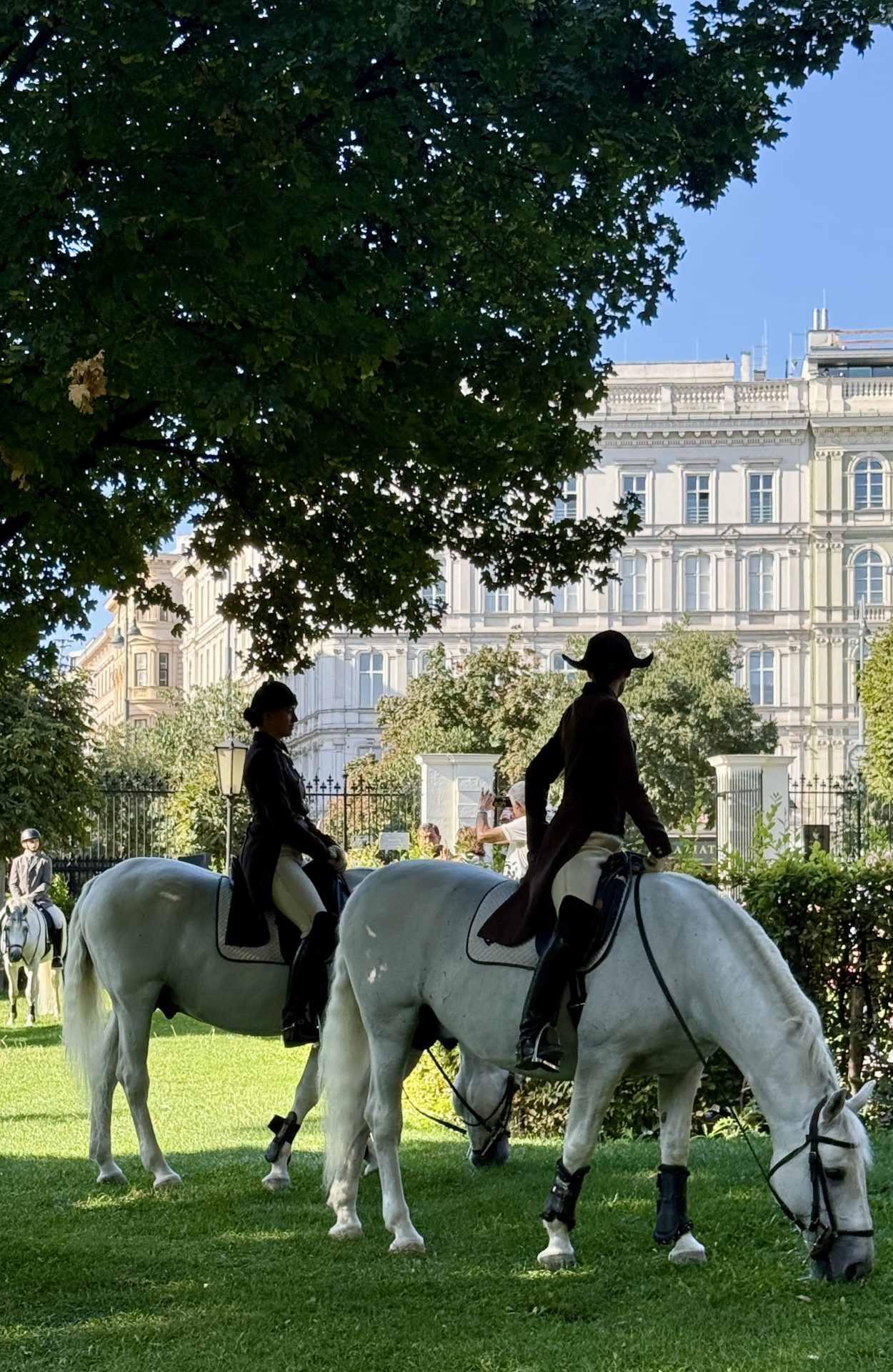
The story of the Lipizzaner breed begins in 1580, when Archduke Charles II of the Habsburg dynasty established a court stud farm in the village of Lipizza, near Trieste — then part of the sprawling Habsburg Empire, today located in modern Slovenia. The archduke’s vision was to create a horse worthy of the imperial court: elegant enough for ceremony, intelligent enough for the demanding discipline of classical dressage, and robust enough to endure. He crossed Iberian horses — prized for their agility and noble bearing — with local Karst breeds known for their hardiness and endurance. Arabian bloodlines were later introduced, adding refinement and fire.
Come and experience travel!
Personally designed, seamlessly delivered – your journey, our expertise!
We are a boutique travel agency and consultancy specializing in Hub & Spoke Tours across Central Europe, the Benelux and the Dolomites.
Over the following centuries, six founding stallion lines emerged, and these bloodlines are still meticulously maintained today. Every living Lipizzan can trace its lineage back to one of these six dynasties: Pluto, Conversano, Neapolitano, Favory, Maestoso, and Siglavy. The breed survived wars, revolutions, and the collapse of the empire that created it. During both World Wars, the horses were evacuated under dramatic circumstances to protect the genetic treasure they represent — the most famous rescue, facilitated by American General George S. Patton in 1945, remains one of the most celebrated acts of cultural preservation in military history.
Today, the breed’s primary nursery is the Piber Federal Stud, a lush estate nestled in the rolling hills of western Styria, about two hours southwest of Vienna. This is where the foals are born, raised, and evaluated before the most promising young stallions begin their journey to the capital.
Born in Shadow, Destined for Light: The Remarkable Transformation of Color
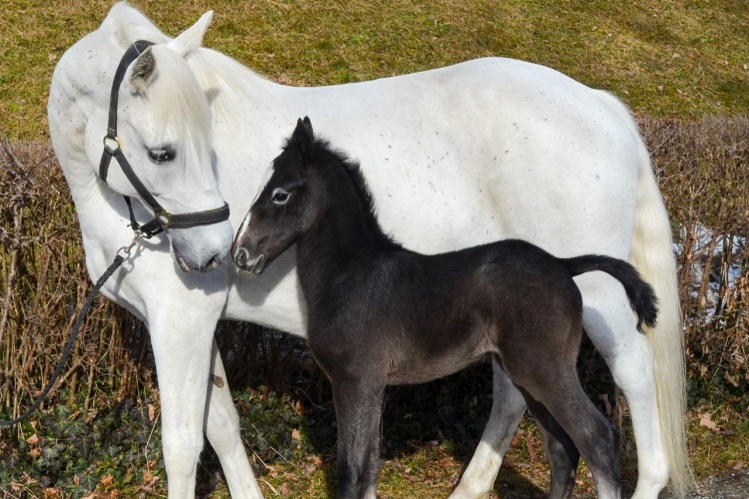
One of the most enchanting surprises for first-time visitors is learning that these iconic white horses are not born white at all. Lipizzaner foals arrive in the world wearing dark coats — black, brown, or deep bay — and they look nothing like the luminous creatures audiences admire in performance. The transformation is gradual and governed by a specific genetic trait: progressive graying. Over a period of six to ten years, the dark pigment in their coat slowly fades, passing through stages of dappled gray before reaching the signature near-white that has made them famous.
Occasionally, a Lipizzan retains its dark coat into adulthood — and at the Spanish Riding School, tradition holds that having at least one dark horse among the performing stallions brings good luck. Far from being a defect, these rare bay or black individuals are celebrated as a living reminder of the breed’s genetic depth.
The biology behind this coat color genetics is fascinating: it involves a dominant gray gene that progressively depigments the hair without affecting the skin beneath. This is why Lipizzaner stallions often have dark, expressive eyes and charcoal-gray skin even under their pale coats — a detail that becomes strikingly visible up close and adds to their almost sculptural beauty.
The Spanische Hofreitschule: Where Art Meets Athleticism
The Spanish Riding School — the Spanische Hofreitschule — is the oldest and most prestigious institution of classical dressage in the world, and the only one still practicing the complete tradition of Haute École, or “High School” riding, exactly as it was codified during the Renaissance. Its name does not refer to Spain but to the Spanish horses that formed the breed’s original foundation. Founded in 1572, the school has operated continuously for over four and a half centuries, and its home — the breathtaking Winter Riding School designed by Joseph Emanuel Fischer von Erlach and completed in 1735 inside the Hofburg Palace — is itself an architectural masterpiece.
What distinguishes the Spanish Riding School from any other equestrian performance in the world is its philosophical foundation. This is not entertainment. It is not spectacle for its own sake. The movements performed by the stallions — from the collected pirouette to the legendary airs above the ground such as the Levade, the Courbette, and the Capriole — are rooted in movements horses naturally perform in freedom. Classical dressage, as practiced here, is the art of refining and elevating what the horse already knows instinctively. The rider’s role is not to impose but to listen, guide, and bring out the horse’s natural expression at its highest level.
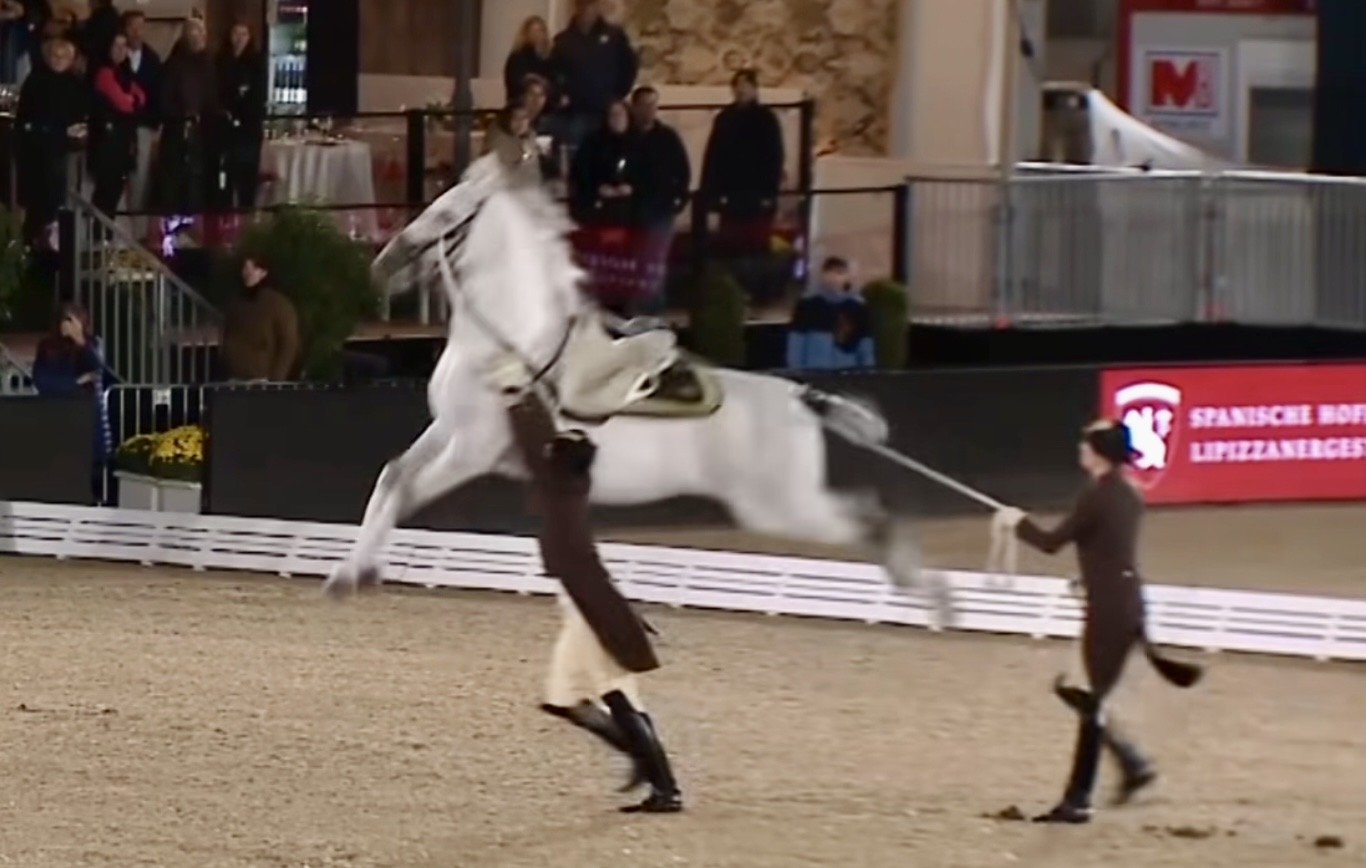
The Capriole, in which the stallion leaps into the air and kicks out with all four legs suspended off the ground, is perhaps the most spectacular feat in all of equestrian art. It takes years of patient training before a horse and rider even attempt it. Some stallions never perform it in their careers — not because of failure, but because the school respects each individual animal’s physical aptitude and temperament. No horse is forced into a movement that does not suit its body or mind.
Fueling an Equine Athlete: Customized Diets and Daily Care
Behind the elegance of every performance lies an infrastructure of care so detailed, so individualized, that it rivals the support systems surrounding elite human athletes. Each stallion at the Spanish Riding School follows a customized dietary plan developed specifically for his age, weight, workload, metabolism, and even temperament.
The foundation of the diet is high-quality meadow hay, sourced from carefully managed Austrian pastures, which provides the fiber essential for healthy digestion. This is supplemented with measured portions of oats — the traditional energy source for working horses — adjusted daily based on how intensely the stallion has trained. Some horses receive additional minerals, vitamins, or specialized supplements based on veterinary assessments conducted at regular intervals throughout the year.
Water quality and intake are monitored. Feeding schedules are consistent, because horses are creatures of routine whose digestive systems — long, delicate, and designed for continuous grazing — function best with regularity and predictability. Nothing is left to chance.
Beyond nutrition, the daily routine of a performing stallion is a carefully orchestrated balance of physical work, mental stimulation, rest, and grooming. Mornings typically begin with grooming sessions that serve as both hygiene and bonding rituals between horse and rider. Training sessions are kept relatively short by design — usually around an hour — because the movements of classical dressage demand extreme concentration and muscular effort. Overtraining is considered not just counterproductive but ethically unacceptable.
Each stallion’s physical condition is continually assessed by an in-house team of veterinarians and farriers. Hooves are trimmed and shod on individualized schedules. Joints, tendons, and muscles receive the same attentive monitoring that a professional ballet dancer might expect. The parallel is apt: these are equine athletes performing at the highest level, and their well-being is the non-negotiable priority that sustains the entire tradition.
A Life Well Lived: Longevity and the Journey to Retirement
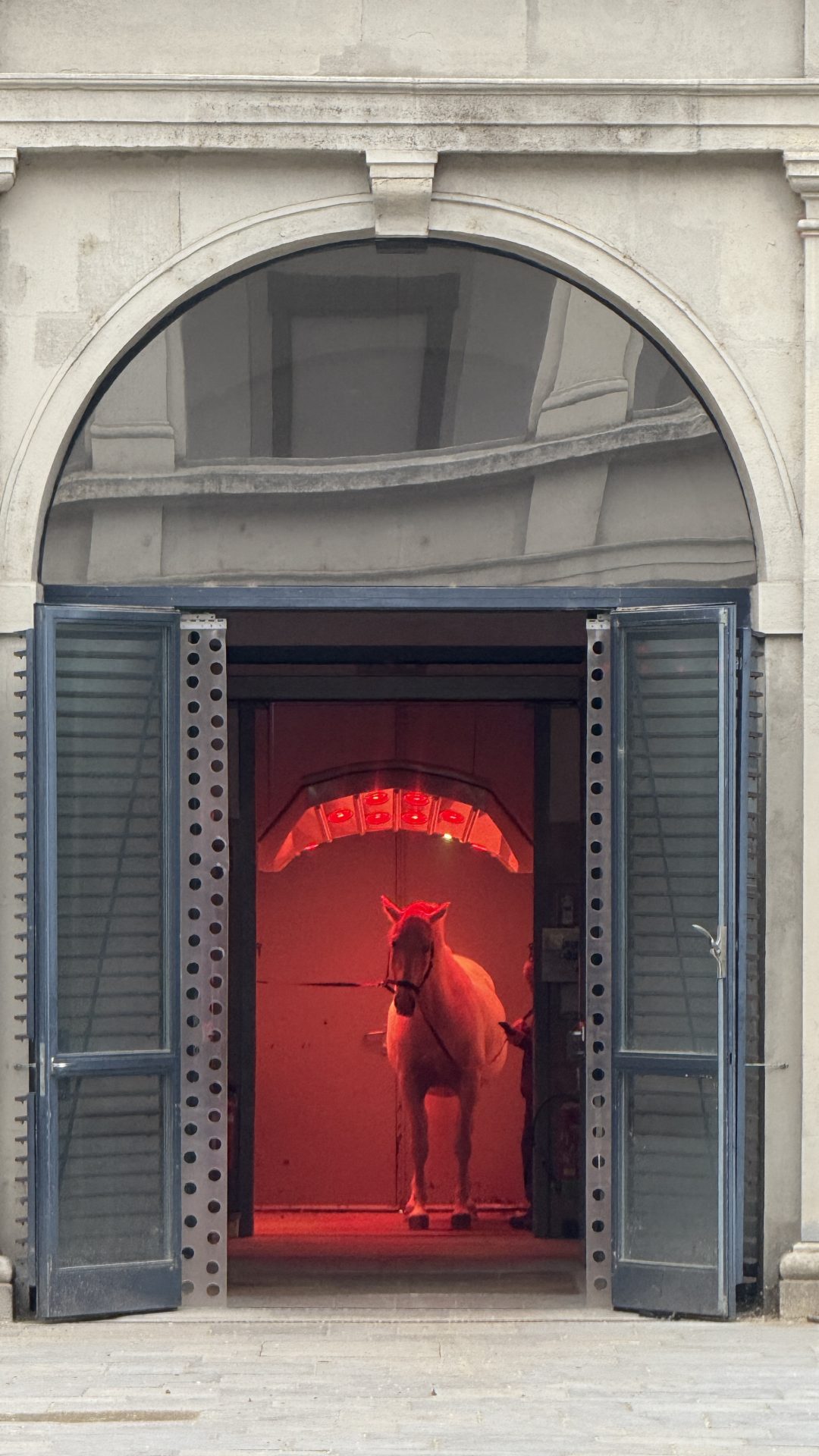
One of the most telling indicators of the quality of care these horses receive is their remarkable lifespan. While the average life expectancy for most horse breeds ranges from 25 to 30 years, Lipizzaner stallions frequently live well into their late twenties and thirties. Some have reached 35 or beyond. This exceptional longevity is no accident — it is the direct result of generations of careful breeding for soundness, combined with the individualized nutrition, thoughtful conditioning, and low-stress management practices that define their daily lives.
A stallion’s performing career at the Spanish Riding School typically spans about 15 to 20 years. Training begins when the young horse arrives from Piber at approximately four years of age and progresses patiently through the levels of classical dressage — a process that itself takes six to eight years before a stallion is considered fully trained for Haute École. There is no rushing. The institution operates on a timeline measured not in quarterly targets but in decades.
When a stallion’s performing days come to an end — whether due to age, a minor physical limitation, or simply the natural slowing that comes with a long athletic career — he does not face an uncertain future. Retired stallions are transferred to the Heldenberg training center, a pastoral estate in the rolling countryside of Lower Austria, about an hour north of Vienna. Here, surrounded by open meadows and gentle hills, the horses live out their remaining years in comfort and dignity. Some participate lightly in breeding programs. Others simply enjoy the unhurried rhythm of pasture life — grazing, socializing with other retired stallions, and receiving the continued veterinary and nutritional care they have known their entire lives.
The Piber Federal Stud, where the breed’s mares and foals reside, also welcomes visitors, offering an opportunity to see the youngest generation of Lipizzaner foals — dark-coated, long-legged, and full of playful energy — alongside the elegant broodmares who carry centuries of imperial heritage in their bloodlines.
A Journey Worth Making
The Lipizzaner tradition is not a museum exhibit frozen behind glass. It is a living, breathing cultural practice sustained by deep expertise, genuine respect for the animal, and an unwavering commitment to excellence that has outlasted empires. Witnessing a morning training session at the Winter Riding School, visiting the foals at Piber, or walking the grounds of Heldenberg where retired stallions graze under open skies — these are experiences that connect travelers to something rare and irreplaceable.
For those seeking more than a destination, more than a checklist, more than a photograph — for those who travel to be moved, challenged, and genuinely enriched — the white horses of Vienna are waiting.
Selected Scientific and Historical Resources on the Lipizzaner Breed
- UNESCO Intangible Cultural Heritage: Classical Horsemanship of the Spanish Riding School – Provides official documentation on the ongoing four-century tradition of High School equitation, emphasizing its philosophical foundation and global cultural significance.
- Austria-Forum: The Lipizzaner – An encyclopedic historical overview from the Austrian cultural network, detailing the establishment of the court stud in 1580, the Iberian and Arabian crossbreeding, and the six classical founding sire lines.
- The National WWII Museum: Operation Cowboy – A detailed historical account of the U.S. military’s 1945 mission, authorized by General Patton, to rescue the Lipizzaner breeding herd and preserve this irreplaceable genetic treasure.
- Nature Genetics: A Mutation Inducing Progressive Early-Onset Graying in Horses – A peer-reviewed biological study explaining the dominant genetic mutation responsible for progressive hair depigmentation, confirming why Lipizzaner foals are born dark and transition to white while retaining dark skin.
- PubMed: Pedigree Analysis of the Austrian Lipizzan Horse Population – A scientific analysis of the genetic diversity and meticulous lineage tracking maintained at the Piber Federal Stud, demonstrating the depth of the breed’s genetic preservation.
- Burghauptmannschaft Österreich: The Spanish Riding School – Official Austrian government documentation detailing the architectural and heritage history of the Hofburg Palace installations, focusing on Joseph Emanuel Fischer von Erlach’s 1735 Winter Riding School.
- National Institutes of Health (PMC): Kinematics and Biomechanics of Classical Dressage – Scientific literature examining the muscular and biomechanical demands of advanced dressage, supporting the principle that Haute École movements like the Capriole refine natural equine behaviors.
- National Institutes of Health (PMC): Feeding Management of the Equine Athlete – A veterinary and scientific review of equine gastrointestinal physiology, validating the necessity of a highly structured, forage-based diet supplemented with measured oats for working stallions.
- Frontiers in Veterinary Science: Welfare Assessment in Elite Sport Horses – Academic research outlining the rigorous routine veterinary, farrier, and training assessment practices required to maintain the long-term health and psychological equilibrium of equine athletes.
- PubMed: Factors Influencing Longevity and Lifespan in Horses – A scientific study investigating the variables that contribute to exceptional equine longevity, substantiating the correlation between individualized low-stress management, careful breeding, and the remarkably long lifespans of retired Lipizzaner stallions.
We look forward to hearing from you:
Travel Guide
Climate Certified
Award Winner 2026
Transport Agent
State Certified
Water Sommelier
Come and experience travel!
Personally designed, seamlessly delivered – your journey, our expertise!
We are a boutique travel agency and consultancy specializing in Hub & Spoke Tours across Central Europe, the Benelux and the Dolomites.
Tour Guide