

Experience Travel Blog
From Hidden Sanctuary to Symbol of Survival: Vienna’s Stadttemple by Josef Kornhäusel
What if Vienna’s most powerful story hides behind a facade you’d walk right past?
Most American travelers explore Vienna’s grand palaces and famous coffeehouses—but miss a hidden masterpiece that survived the Holocaust because of its invisibility. This article reveals the incredible story of a stunning synagogue concealed within an ordinary apartment building, why a 200-year-old law accidentally saved it from Nazi destruction, and how to visit this living monument to resilience.
by Long Lin-Maurer • September 25, 2026
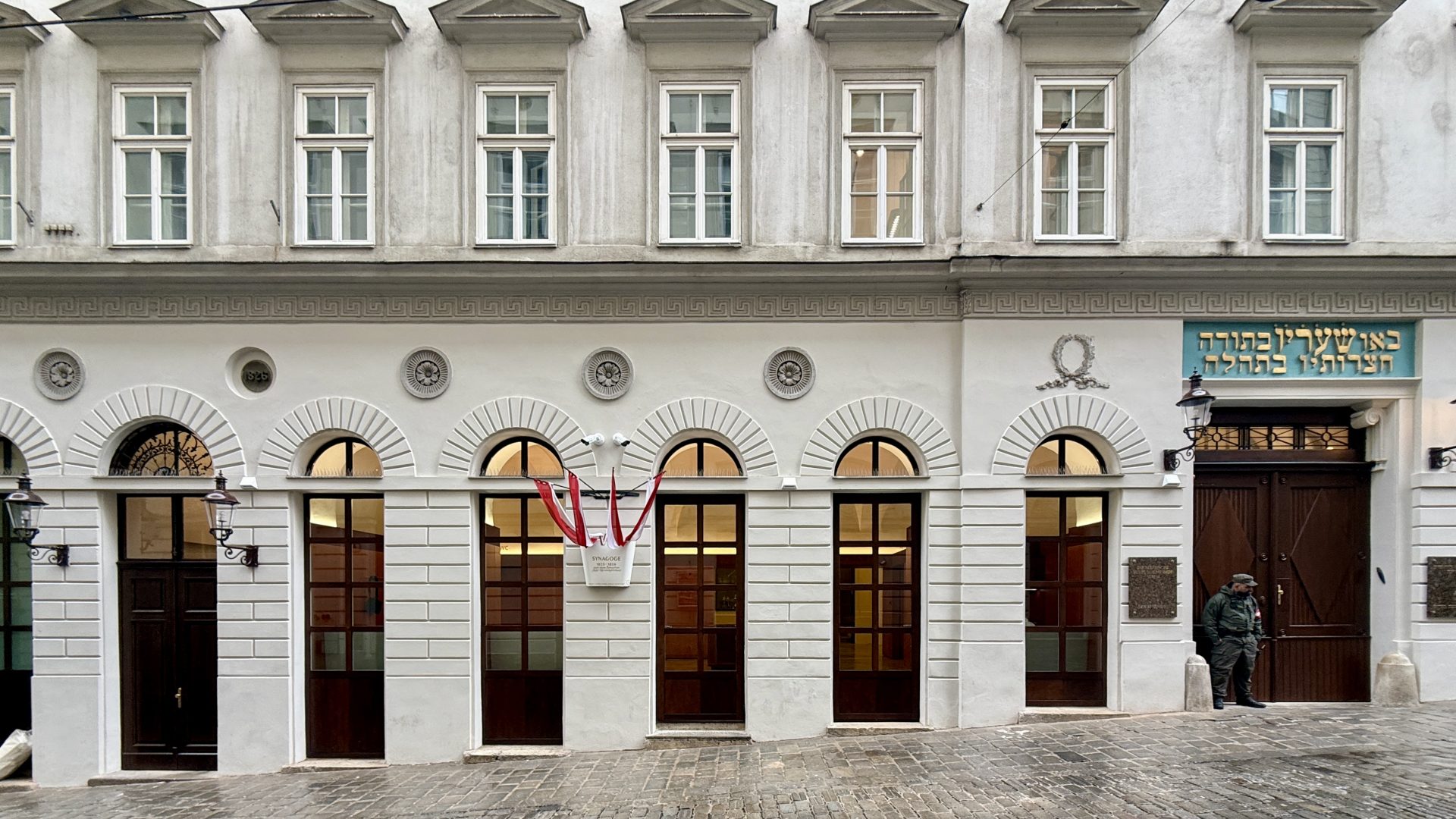
Vienna’s Hidden Sanctuary: The Stadttemple by Josef Kornhäusel
Vienna presents itself as a city of grand facades and imperial splendor. The Ringstrasse showcases neo-Gothic spires and Neoclassical monuments that announce their presence with theatrical confidence. Yet tucked away on Seitenstettengasse 4, a narrow lane in the historic first district, stands one of Europe’s most significant sites of Jewish heritage—a building that appears, at first glance, to be nothing more than an ordinary residential block. This is Vienna’s Stadttemple by Josef Kornhäusel.
This architectural anonymity is precisely what makes the Vienna City Temple one of the most compelling stories of survival in modern European history. Behind unremarkable walls lies a masterpiece of early nineteenth-century design, a sanctuary that has witnessed nearly two centuries of the Jewish community Vienna, its persecution, destruction, and renewal. Understanding why this historic Viennese synagogue hides in plain sight requires a journey into Habsburg religious politics and the terrible night in November 1938 when concealment became salvation.
Come and experience travel!
Personally designed, seamlessly delivered – your journey, our expertise!
We are a boutique travel agency and consultancy specializing in Hub & Spoke Tours across Central Europe, the Benelux and the Dolomites.
The Habsburg Edict That Shaped a Hidden Sanctuary
The year was 1826, and Emperor Francis I ruled over a vast multi-ethnic empire. The emperor’s approach to religious tolerance was pragmatic, formalized in decrees like the Habsburg Edict of Tolerance. This policy stipulated that non-Catholic houses of worship could not display prominent facades on public streets. Synagogues and other religious buildings had to be architecturally invisible, tucked behind residential structures. This was tolerance of a particular Habsburg variety—permission to exist, but not to be seen.
For the Jewish community of Vienna, this decree presented a challenge. They needed a proper synagogue to serve their growing population, but it had to be a hidden one. The commission went to Josef Kornhäusel, one of the most accomplished architects of his generation and a master of the Biedermeier and late Classical styles that dominated Austrian architecture. The project would become the Main Synagogue of Vienna.
Josef Kornhäusel’s Architecture: Genius in Disguise
Josef Kornhäusel had already established himself through prestigious projects across the Habsburg lands. His portfolio demonstrated an architect comfortable with constraints while achieving aesthetic excellence. The commission for the Synagogue of Seitenstettengasse would test that ability like no other.
Wedged into a narrow block, the synagogue needed to occupy an irregular space while remaining concealed. Kornhäusel’s solution was ingenious, a defining example of Josef Kornhäusel architecture: he designed the building as part of a residential complex, with apartments forming a protective shell. From the street, one sees a typical Viennese facade. The entrance to what is also known as the Seitenstetten Synagogue gives no indication of what lies beyond. Only those who understand the history recognize this stunning building for what it represents.
The Oval Sanctuary: Inside Vienna’s City Temple
Stepping through the entrance and passing modern security checkpoints—a necessity underscoring the ongoing vulnerability of Jewish communities—visitors enter a space that defies the bland exterior. The sanctuary explodes with color, light, and symbolic richness, a testament to what became Kornhäusel’s masterpiece in Vienna.
Kornhäusel’s unique oval sanctuary design creates remarkable acoustics and an intimate atmosphere. The architect blended elements of Roman temple architecture with contemporary Viennese elegance. Twelve Ionic columns of pale marble ring the sanctuary, representing the twelve tribes of Israel. They support a gallery and draw the eye to the building’s most breathtaking feature: the dome. Painted deep blue and studded with golden stars, the dome transforms the ceiling into a representation of the heavens. The effect is one of transcendence, proving that architectural magnificence does not require external display.
Kristallnacht in Vienna: When Concealment Became Salvation
For over a century, the Stadttemple served as the heart of Viennese Jewish life, a community that had become one of the most vibrant in Europe. The Nazi annexation of Austria in March 1938 brought this to a brutal end.
The night of November 9th brought the horror of the November 1938 pogrom, also known as Kristallnacht. Across Vienna, forty-two synagogues and prayer houses were destroyed, most burned to the ground. Centuries of architectural heritage vanished.
Yet Vienna’s Stadttemple by Josef Kornhäusel survived. The very edict that forced it into hiding now proved its protector. Because Kornhäusel had embedded the sanctuary within a residential block, the Nazis could not burn it without consuming an entire block of apartments. The interior suffered severe damage, but the structure—the blue dome, the marble columns, the oval sanctuary—endured the devastation of Kristallnacht in Vienna.
Restoration of the Main Synagogue of Vienna
The decades following World War II saw the slow rebuilding of Vienna’s Jewish community. The City Temple Vienna, damaged but unbroken, became a symbol of both loss and stubborn persistence. Restoration efforts began soon after the war, but a more recent comprehensive project has returned Kornhäusel’s masterpiece to its original splendor. Conservators have carefully restored the celestial dome and renewed the intricate decorative elements.
Today’s visitors experience the Stadttemple much as nineteenth-century worshippers would have, though security measures reflect a sobering modern reality. Visiting this active house of worship requires advance registration and respect for the community that continues to gather in this sacred space.
A Center of Viennese Jewish History and Heritage
This remarkable building stands at the center of a rich landscape of Viennese Jewish history. The nearby Jewish Museum Vienna chronicles centuries of community life, while the Judenplatz Holocaust Memorial—designed by Rachel Whiteread—offers a stark commemoration of those who perished. Understanding this history transforms any visit to Vienna, adding depth to its imperial grandeur.
For travelers seeking meaningful encounters, the story of Josef Kornhäusel’s synagogue offers profound opportunities. It invites visitors into a space where architecture tells stories of resilience, where a blue dome represents both the heights of creativity and the overcoming of hatred. The building still hides, requiring those who seek it to know where to look. Perhaps that is fitting. Some stories must be sought out with intention. This hidden synagogue rewards those who find it with an experience that illuminates the past and the ongoing struggle to preserve cultural memory.
Vienna’s Stadttemple by Josef Kornhäusel – Online Resources
- Israelitische Kultusgemeinde Wien – Official Stadttempel Page – Official website of the Jewish Community Vienna with historical information and visiting details about the main synagogue
- Wien Geschichte Wiki – Stadttempel Entry – Comprehensive historical documentation by the City of Vienna covering the synagogue’s architecture and significance
- Documentation Centre of Austrian Resistance – Stadttempel during the Novemberpogrom – Historical documentation about the synagogue’s survival during the 1938 pogrom
- United States Holocaust Memorial Museum – Vienna Article – Scholarly article including references to Vienna’s Jewish community and the Stadttemple
- Wien Geschichte Wiki – Josef Kornhäusel – Biographical entry about the architect Josef Kornhäusel and his works in Vienna
- Vienna Tourist Board – Stadttempel Information – Cultural and historical background information about the synagogue as a heritage site
- Encyclopaedia Britannica – Vienna – Academic encyclopedia entry on Vienna including references to Jewish cultural heritage
- Jewish Heritage Europe – Vienna – Educational resource documenting Jewish architectural heritage including the Stadttemple
- Cornell University Library – Digital Collections on Synagogue Architecture – Academic digital archive featuring historical synagogue architecture including Viennese examples
- Europeana – Vienna Synagogue Collections – European digital cultural heritage platform with historical documents and images of Vienna’s Jewish sites
We look forward to hearing from you:
Travel Guide
Climate Certified
Award Winner 2026
Transport Agent
State Certified
Water Sommelier
Come and experience travel!
Personally designed, seamlessly delivered – your journey, our expertise!
We are a boutique travel agency and consultancy specializing in Hub & Spoke Tours across Central Europe, the Benelux and the Dolomites.
Tour Guide